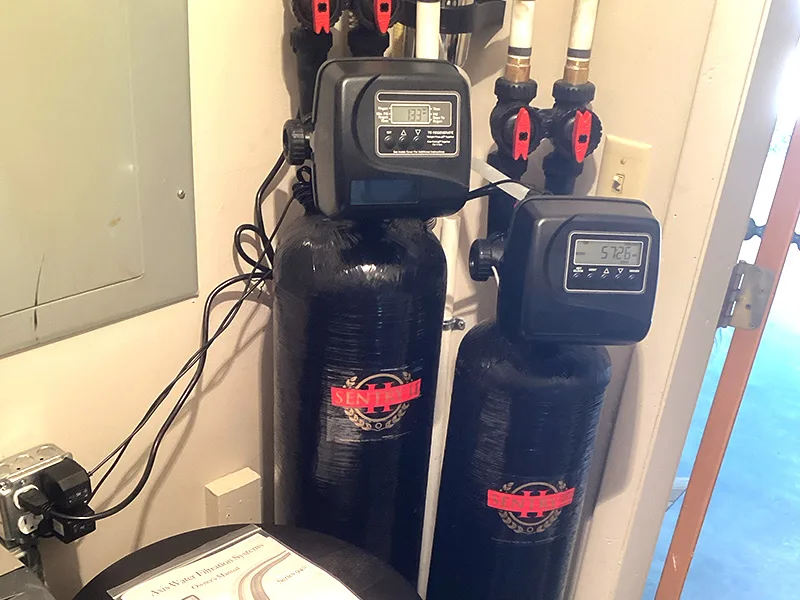
If you own a home in Utah, a water softener isn’t a luxury — it’s a necessity. With water hardness ranging from 15 to 25+ grains per gallon across most of the state, unsoftened water wreaks havoc on your plumbing, appliances, and daily life.
Sizing tip
Softeners are sized in grains. Household size × 75 gallons/day × your water hardness (gpg) × 7 days = weekly grain load. Oversizing slightly beats undersizing — fewer regenerations means less salt and longer resin life.
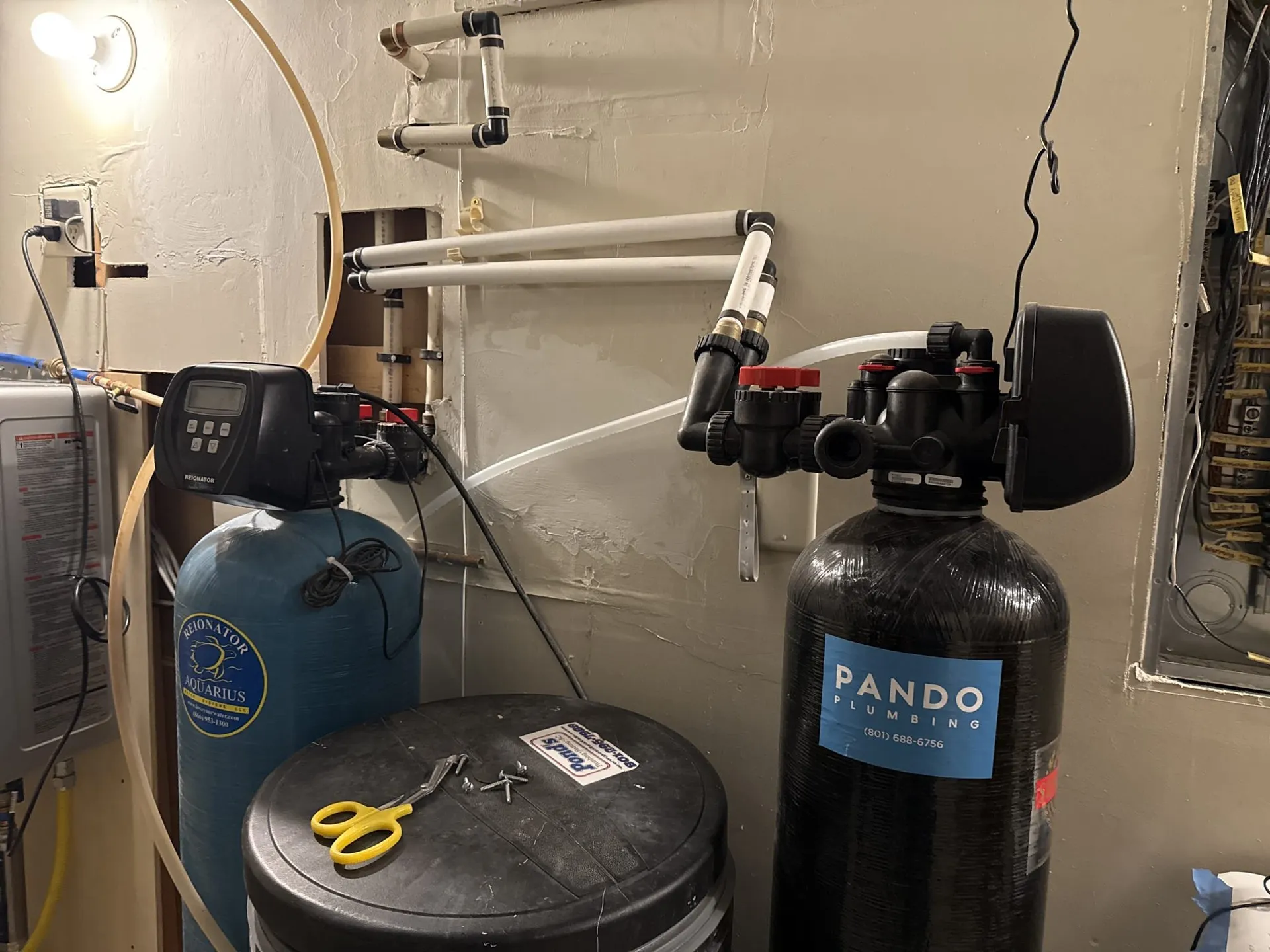
How Water Softeners Work — An ion-exchange water softener contains a tank of resin beads charged with sodium ions. As hard water flows through the tank, calcium and magnesium ions (the minerals that make water "hard") swap places with the sodium ions. The result is soft water throughout your entire home. Periodically, the system regenerates by flushing the resin with a salt brine solution to recharge the beads.
Sizing Your Softener — A properly sized softener handles your home’s daily water usage without regenerating too frequently. The formula: (number of people) x (gallons per day, typically 75) x (grains of hardness) = daily grain removal needed. For a family of 4 in an area with 20 gpg hardness, that’s 4 x 75 x 20 = 6,000 grains per day. A 48,000-grain softener would regenerate about every 8 days.
Salt Usage — Modern high-efficiency softeners use 40–80 lbs of salt per month for a typical Utah family. That’s about one 40-lb bag every 2–4 weeks. We recommend solar salt crystals or evaporated salt pellets — avoid rock salt as it contains more impurities that can clog the system.
Maintenance — Water softeners are relatively low-maintenance. Check and refill salt monthly. Clean the brine tank once a year. Replace the resin bed every 10–15 years (the main reason softeners eventually need replacement). Have a professional check settings annually to ensure optimal regeneration.
What About Potassium Chloride? — If you’re concerned about sodium, potassium chloride is an alternative to salt. It works the same way but costs 3–4x more. For most people, the amount of sodium added by a softener is minimal — about the amount in a slice of bread per glass of water. But if you’re on a strict sodium-restricted diet, potassium chloride or a reverse osmosis system for drinking water is a good solution.
Cost Expectations — A quality water softener installed in a Utah home typically runs $1,500–$3,500 depending on size, brand, and installation complexity. Higher-end units with WiFi monitoring and demand-based regeneration cost more but use less salt and water. Most systems pay for themselves within 3–5 years through reduced appliance repairs, lower energy bills, and less detergent usage.
Ready to protect your home from Utah’s hard water? Start with our free water quality guide to learn more, or schedule a water test and get a personalized recommendation for your home.
Related Plumbing services
Need Help With This?
Our team is ready to help with expert plumbing services across Utah.