Utah Homeowner FAQ
Plain-English answers to the questions Utah homeowners actually ask about heating, cooling, plumbing, water, and electrical. No jargon, no upsell, just the stuff you need to make good decisions about your home.
Browse by topic
31 answers across 8 categories, updated for Utah homes on the Wasatch Front.
Heating & Cooling
7Furnaces, air conditioners, heat pumps, sizing, efficiency, lifespan, and repair-vs-replace decisions.
Plumbing
4Water heaters, drain cleaning, leak repair, gas lines, and everyday plumbing questions.
Electrical
4Panel upgrades, EV chargers, dedicated circuits, safety inspections, and NEC code questions.
Water Quality
5Hardness, softeners, reverse osmosis, whole-home filtration, and Utah's well-known water profile.
Indoor Air Quality
3Filtration, humidification, ventilation (ERV/HRV), UV-C, and Utah wildfire-smoke season.
Pricing & Process
3Dispatch fees, estimates, financing, warranties, and what happens when you book.
Emergency & After-Hours
2When to call, what counts as an emergency, and what we recommend you do first.
Utah Homeowner Basics
3Altitude, hard water, Wasatch Front climate, and rebates unique to Utah homes.
Heating & Cooling
Furnaces, air conditioners, heat pumps, sizing, efficiency, lifespan, and repair-vs-replace decisions.
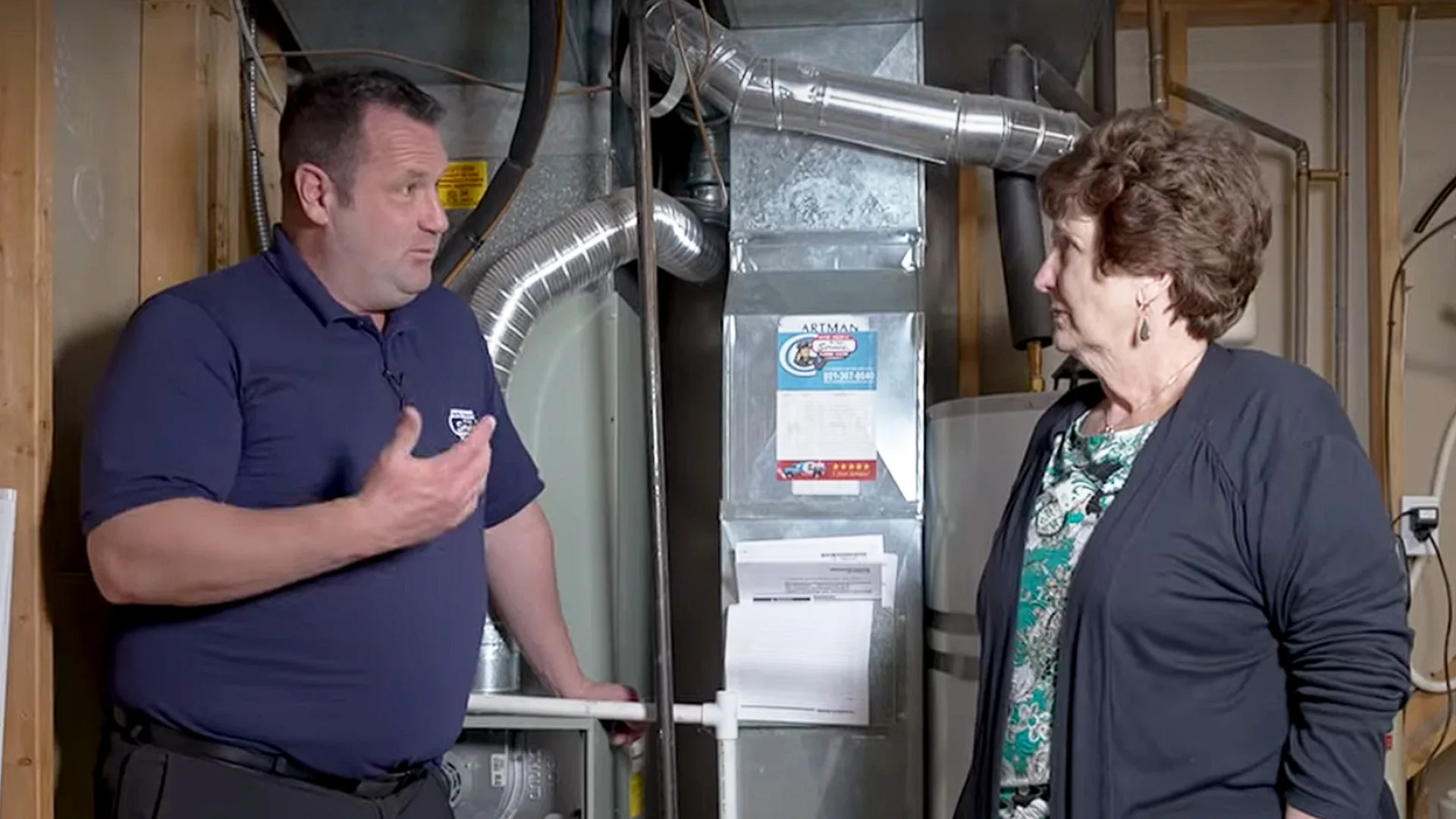
How long does a furnace last in Utah?
A well-maintained gas furnace in Utah typically lasts 15-20 years, with 80% AFUE models averaging 18 years and 96% AFUE condensing models averaging 15-17 years due to condensate-related component wear.
How do I know if my furnace is dying?
The biggest warning signs are a yellow or flickering burner flame (should be steady blue), uneven heat between rooms, short-cycling, rising gas bills without a usage change, strange banging/rumbling noises, and visible rust or scale on the heat exchanger.
Should I repair or replace my furnace?
If the repair quote exceeds 50% of a new furnace AND the unit is over 12 years old, replacement is almost always cheaper over a 5-year horizon. Under 8 years old, repair. In between, it depends on the specific part and efficiency rating.
What's the best furnace efficiency rating for Utah?
For most Utah homes, a 96% AFUE two-stage or modulating furnace is the best long-term choice, the higher efficiency pays back within 8-10 years on Wasatch Front winter gas bills, and staging prevents the hot/cold cycling that single-stage 80% units cause.
How often should I change my furnace filter?
1-inch pleated filters: every 1-3 months. 4-inch or 5-inch media cabinets: every 6-12 months. Homes with pets, construction dust, or wildfire smoke: the short end of each range.
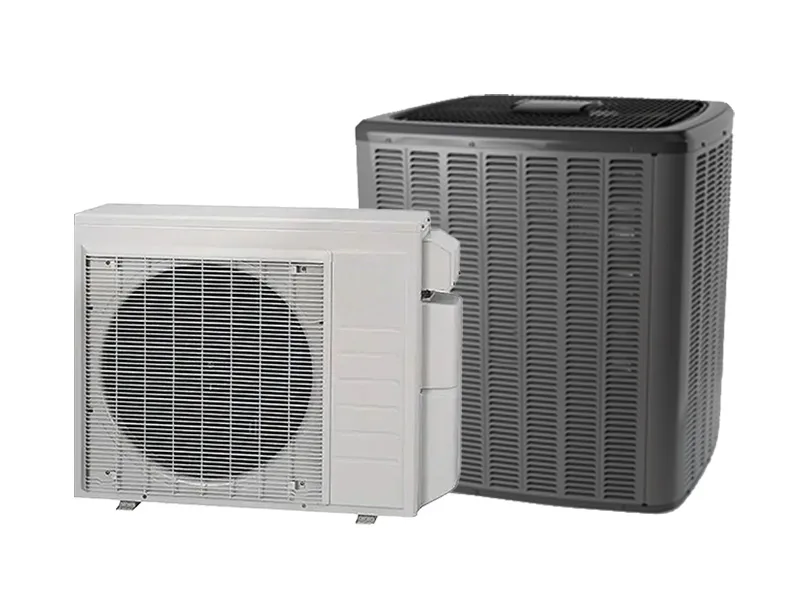
Do I need a heat pump in Utah?
Heat pumps make sense in Utah if you're replacing both the AC and furnace at once, if you have solar, or if you want to decarbonize. Cold-climate heat pumps now work effectively down to -15°F, and the best solution for most Utah homes is a dual-fuel system (heat pump + gas furnace backup).
How do I size an air conditioner for my home?
A Manual J load calculation is the only correct way. Rule-of-thumb 'one ton per 500-600 sqft' oversizes most Utah homes by 20-40% because it ignores insulation, window orientation, shading, and air-sealing improvements newer homes already have.
Plumbing
Water heaters, drain cleaning, leak repair, gas lines, and everyday plumbing questions.
How long does a water heater last in Utah?
A standard tank water heater in Utah lasts 8-12 years. Tankless units last 18-22 years. Utah's very hard water shortens tank life by 2-4 years unless the tank is flushed annually and the anode rod is replaced every 3-5 years.
Should I get a tankless water heater?
Tankless makes sense for long-term homeowners, households with high hot-water demand, or anyone who's already replacing a tank and wants 20+ years out of the next unit. It costs more upfront but saves on gas and lasts roughly 2x as long.
Why is my water heater making popping or rumbling noises?
Popping, crackling, or rumbling from a tank water heater is almost always mineral scale sitting on the bottom of the tank above the burner. Water trapped under the scale boils and pops as it escapes. It's a sign the tank needs flushing, and in Utah, it's a sign you should flush annually going forward.
What causes low water pressure in the whole house?
Whole-house low pressure is almost always the pressure-reducing valve (PRV) at the main shutoff, a partially-closed main valve, a clogged whole-home filter, or mineral buildup inside old galvanized pipes. A single fixture with low pressure is usually an aerator or supply-line issue.
Electrical
Panel upgrades, EV chargers, dedicated circuits, safety inspections, and NEC code questions.
Do I need a panel upgrade to install an EV charger?
Not always. Most 200A panels built after 2000 can handle a Level 2 charger, but a load calculation is required. Panels at 100A or Federal Pacific / Zinsco panels of any size should be replaced before adding EV load.
Is my Federal Pacific electrical panel dangerous?
Yes: Federal Pacific Stab-Lok panels have a documented history of breakers that fail to trip during overloads, creating a real fire risk. Insurance carriers are increasingly requiring replacement. We recommend replacement on sight regardless of panel age.
When do I need to upgrade to a 200-amp panel?
Upgrade to 200A when: you're adding an EV charger, heat pump, or induction range; your breaker space is full; your existing panel is 100A or smaller; or your panel brand is Federal Pacific or Zinsco regardless of amperage.
How much does an EV charger installation cost in Utah?
A Level 2 EV charger installation in Utah depends on the distance from the panel, whether a panel upgrade is needed, and whether any trenching or drilling is required. The in-home estimate is free, and you get the flat-rate price in writing before any work starts.
Water Quality
Hardness, softeners, reverse osmosis, whole-home filtration, and Utah's well-known water profile.
How hard is Utah's water?
Very hard. Most Utah municipalities measure 15-25 grains per gallon (gpg), with some areas reaching 30+ gpg. Anything over 10 gpg is classified as 'very hard' and causes scale buildup on fixtures, water heaters, and appliances.
Do I need a water softener in Utah?
In almost every Utah home, yes. With hardness typically at 15-25 gpg, a softener pays for itself in extended appliance life (water heater, dishwasher, washing machine), less scale on fixtures, and significantly reduced soap/detergent usage.
Do I need both a water softener AND a reverse osmosis system?
They solve different problems, and in Utah most homes benefit from both. A softener handles hardness for the whole house (scale, appliances, fixtures). An RO system provides purified drinking water at the kitchen sink (removes lead, PFAS, chlorine byproducts, and the sodium a softener adds).
Is reverse osmosis water safe to drink long-term?
Yes. RO water is safe for long-term drinking. The concern about 'demineralized' water is overblown for anyone eating a normal diet, the minerals you'd miss from RO come from food, not water.
How much salt does a water softener use in Utah?
A properly-sized, modern high-efficiency softener in a typical Utah home uses 40-80 lbs of salt per month, one or two bags: a small monthly cost, and far less than the damage unsoftened water causes.
Indoor Air Quality
Filtration, humidification, ventilation (ERV/HRV), UV-C, and Utah wildfire-smoke season.
What MERV rating should I use in my furnace filter?
MERV 11-13 is the right target for most Utah homes. MERV 8 is too loose for wildfire-smoke season; MERV 16+ restricts airflow too much and can damage your blower motor unless the ductwork is sized for it.
Do I need a whole-house humidifier in Utah?
Most Utah homes benefit from a whole-house humidifier in winter. Indoor relative humidity commonly drops below 20% December-February, which causes dry skin, static shocks, cracked wood floors, and makes respiratory infections worse. Target 35-45% RH.
Do I need an ERV (Energy Recovery Ventilator) in Utah?
ERVs make sense in any tightly-sealed Utah home, especially newer builds (post-2015 with blower-door scores under 3 ACH50). They bring in fresh air without losing the winter humidity or summer cooling, and they filter out wildfire smoke and pollen.
Pricing & Process
Dispatch fees, estimates, financing, warranties, and what happens when you book.
How much is your dispatch or diagnostic fee?
HVAC repairs carry a $79 dispatch and diagnostic fee. Electrical and plumbing repairs carry a $39 dispatch fee. Either fee is waived if you approve a repair at the visit. In-home estimates for new equipment are always free.
Do you charge for estimates?
No, in-home estimates for new equipment are always free. We only charge a diagnostic fee for repair calls, and we waive that fee if you approve the repair.
What happens after I book an appointment online?
You'll get a confirmation email and text immediately. A dispatcher will call to confirm details shortly after during business hours. The day of, you'll get a heads-up call or text 30-60 minutes before the tech arrives, with the tech's name and photo.
Emergency & After-Hours
When to call, what counts as an emergency, and what we recommend you do first.
What if I need emergency or after-hours service?
Call us at 801-407-9320 for any true emergency (no heat in winter, no AC in extreme heat, major leak, no power, gas smell, sewage backup). Online booking forms are for next-business-day appointments, don't wait on a form for an emergency.
My CO alarm went off near my furnace. What do I do?
Get everyone outside immediately, leave the furnace off, and call 801-407-9320. Don't ignore a CO alarm, even brief exposure above 70 ppm can cause headaches and nausea, and sustained exposure is lethal.
Utah Homeowner Basics
Altitude, hard water, Wasatch Front climate, and rebates unique to Utah homes.
What is a PRV and do I need one in Utah?
A pressure-reducing valve (PRV) lowers incoming municipal water pressure to a safe 55-65 psi. Many Utah cities deliver 90-120+ psi because of elevation changes in the distribution system, enough to burst supply lines, blow out fixtures, and void appliance warranties. Most Utah homes need a PRV.
What Utah rebates are available for HVAC upgrades?
Utah homeowners can use Enbridge Gas Utah (ThermWise) and Rocky Mountain Power (Wattsmart) rebates on heat pumps, high-efficiency furnaces, heat pump water heaters, and insulation work. The federal 25C tax credit ended for equipment installed after December 31, 2025.
Does Utah's altitude affect my furnace sizing?
Yes. Above ~2,000 feet, gas furnaces lose BTU capacity because the air is less dense. Utah's Wasatch Front (4,200-5,000 ft) means a rated 80,000 BTU furnace actually delivers closer to 70,000 BTU. Proper installers de-rate by 4% per 1,000 feet above sea level.
Didn't find your question?
Call or text us and a real human at At Your Service Pros will help. In-home estimates for new equipment are always free.