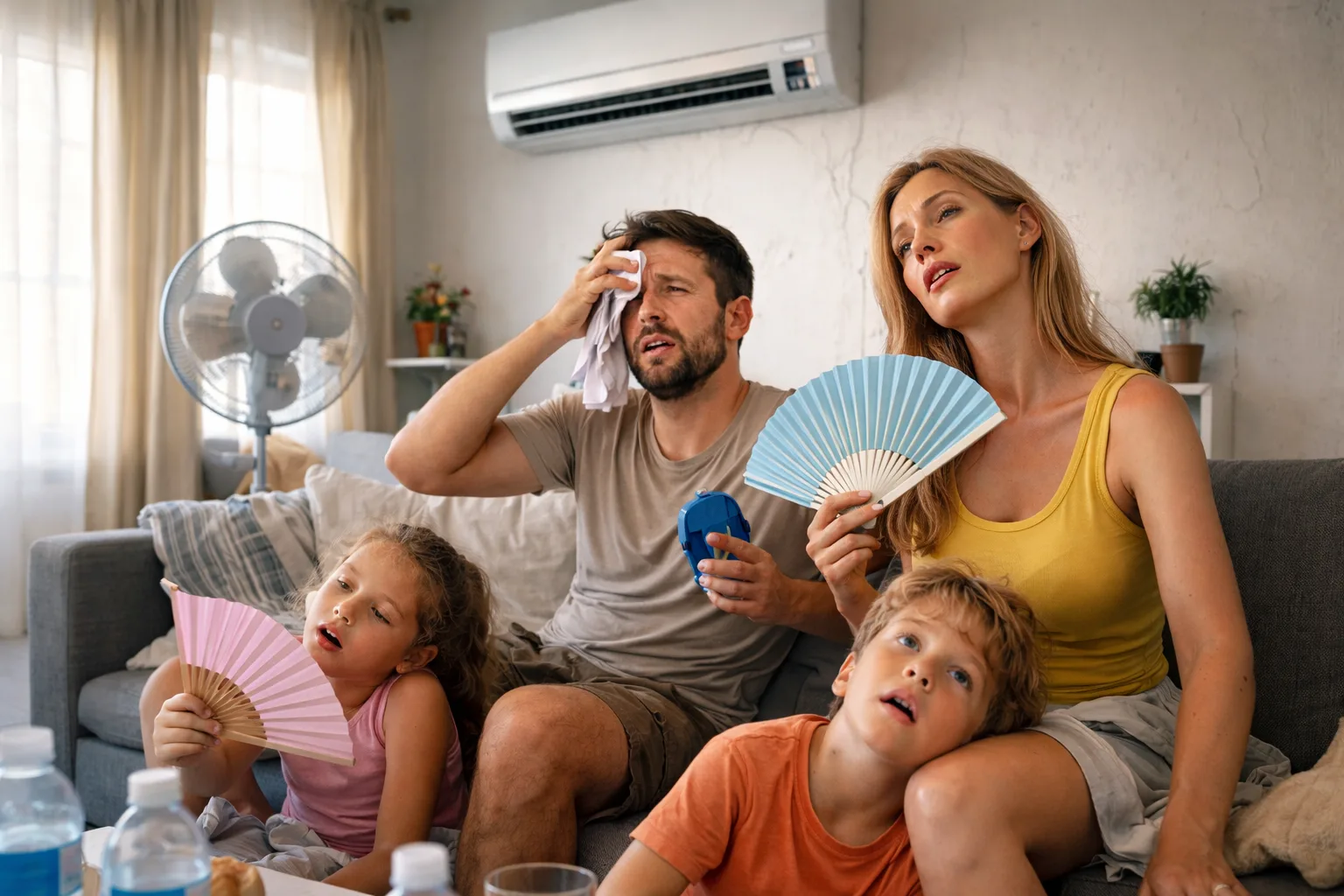
An HVAC emergency—no heat in winter or no AC in summer—can quickly become dangerous. If temperatures soar above 95°F or drop below 50°F inside your home, you're at risk for heat-related illness, freezing pipes, or frozen plumbing. Here's your action plan before calling for emergency service.
Save this number
No heat in January or no AC in a 100° July week is a same-day call: (801) 407-9320. After-hours diagnostic fees are waived if you proceed with the repair.
Step 1: Rule Out Safety Hazards — If you smell gas, don't use electrical switches or the furnace. Open windows immediately, leave the home, and call 911 and your gas provider. If your CO2 detector is alarming, evacuate immediately and call 911. These are genuine emergencies requiring emergency responders, not HVAC technicians.
Step 2: Check the Obvious — Is your thermostat on the right setting (Heat in winter, Cool in summer)? Is the temperature set higher/lower than room temperature? If it's a battery-operated model, try new batteries. Check your electrical panel for tripped breakers and reset any that are in the "off" position. Replace your air filter if it's visibly dirty—a clogged filter can trigger a safety shutdown.
Step 3: Assess Airflow — Feel around your home to check if warm/cool air is flowing from vents. If there's absolutely no airflow, it's likely a blower motor or breaker issue. If some areas have airflow and others don't, you may have a ductwork blockage or zone control issue.
Step 4: Listen and Look — Does your furnace or AC unit make noise when the thermostat calls for heating/cooling? Banging sounds suggest a loose component. Squealing often means a belt or motor bearing problem. No sound at all indicates power issues. Look for any visible damage, water pooling under the unit, or frost on outdoor AC components (in winter).
Step 5: Document the Problem — Take a photo of your thermostat settings and room temperature. Note what time the system failed. Write down any unusual sounds or smells. This information helps our technicians diagnose the problem faster, reducing your emergency service cost.
Step 6: Prepare for Winter — If your furnace has failed and you're waiting for service, close off unused rooms to concentrate heat in occupied spaces. Use supplemental heaters in living areas (but keep them away from flammable materials). Seal any obvious air leaks with towels or caulk. Open cabinet doors under sinks to allow warmer air to reach exposed pipes. Let faucets drip slightly to prevent pipe freezing.
Step 7: Prepare for Summer — If your AC has failed, close blinds and curtains to block solar gain. Use fans to circulate air, which provides psychological comfort even if temperature stays elevated. Open windows at night to cool the home. Avoid using heat-generating appliances (ovens, dryers) during the hottest parts of the day. Seek cooler environments (shopping malls, libraries, restaurants) during extreme heat.
When to Call 911 vs. Emergency HVAC — Call 911 if you detect a gas leak, carbon monoxide alarm is sounding, someone is having a heat-related or cold-related health emergency, or you see visible fire/flames. Call emergency HVAC service (like At Your Service Pros 24-hour line) for system failures, strange noises, or water leaks from the system. Emergency service costs more but is justified when immediate action prevents property damage or unsafe conditions.
Related HVAC services
Need Help With This?
Our team is ready to help with expert hvac services across Utah.