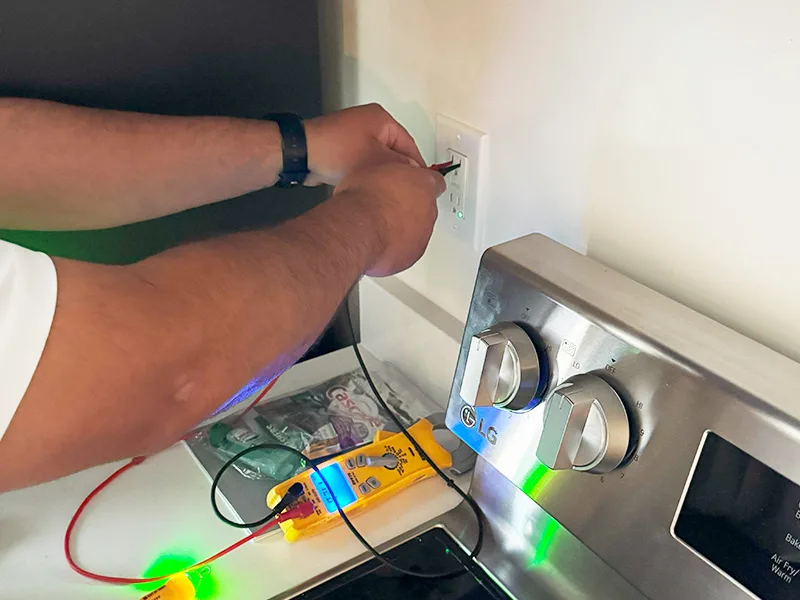
What is GFCI protection?
A Ground Fault Circuit Interrupter (GFCI) monitors the balance of electrical current flowing through a circuit. If it detects even a tiny imbalance (as little as 4-5 milliamps) — indicating current is flowing through an unintended path like water or a person — it shuts off power in 1/40th of a second. GFCIs prevent electrocution and are required by code in wet areas: bathrooms, kitchens, garages, outdoor outlets, and near pools or hot tubs.
What is AFCI protection?
An Arc Fault Circuit Interrupter (AFCI) detects dangerous electrical arcs — sparking that occurs when wiring is damaged, connections are loose, or cords are pinched or frayed. Arcing generates intense heat that can ignite surrounding materials, causing electrical fires. AFCI breakers analyze the electrical waveform to distinguish between normal arcs (like a light switch) and dangerous arcs. Modern code requires AFCI protection in bedrooms, living rooms, hallways, and most other living spaces.
Where are they required?
Current NEC (National Electrical Code) requirements for new construction and major renovations: GFCI protection is required in bathrooms, kitchens (all countertop outlets), garages, outdoors, crawlspaces, unfinished basements, laundry areas, and near pools/hot tubs. AFCI protection is required in bedrooms, living rooms, dining rooms, hallways, closets, sunrooms, and recreation rooms. Many older Utah homes lack both types of protection in areas where they're now required.
Upgrading your home
For GFCI protection, you can either install GFCI outlets (the ones with Test/Reset buttons) at individual locations, or install a GFCI breaker in your panel that protects the entire circuit. DIY GFCI outlets are inexpensive at the hardware store ($15-$25 per outlet) if you're qualified to do the work safely. For AFCI protection, AFCI breakers must be installed in your electrical panel — this requires a licensed electrician. Whole-home GFCI/AFCI upgrades vary widely depending on the number of circuits and panel type — for your specific home, we'll quote on-site, or use our self-help guide at /self-help.
Have questions? We're here to help.
Our licensed technicians serve Utah County, Salt Lake County, and surrounding areas.
Official Resources
Related Guides
Talk to a licensed technician about your specific situation — no pressure, no obligation.
Call (801) 407-9320