Indoor Humidity Control: The Ideal Range and Health Impacts
Understanding humidity, humidifiers, dehumidifiers, and whole-home solutions
Indoor Humidity Control: The Ideal Range and Health Impacts
Video walkthrough coming soon
The ideal humidity range for health and comfort
The EPA and CDC recommend maintaining indoor relative humidity between 30-50%. Below 30%, the air becomes uncomfortably dry, causing dry skin, chapped lips, sinus irritation, and static electricity problems. Respiratory viruses (like influenza) survive longer and transmit more easily in very dry air. Above 60%, moisture promotes mold growth, dust mites multiply, and mildew develops. The 30-50% range supports human health, prevents mold, and minimizes dust mite populations. Homes with wood floors and furnishings also benefit from this range — very dry air causes wood to shrink and crack, while very humid air causes swelling and warping. Maintaining this range with humidifiers or dehumidifiers depending on season is one of the most impactful indoor air quality improvements.
Utah's unique humidity challenge: winter dryness
Utah's climate is semi-arid year-round, but winter becomes extremely dry. Outdoor humidity in winter averages 30-40% (sometimes dropping to 10-15%). When outdoor air is heated indoors, relative humidity drops further (a 35°F day with 30% humidity becomes roughly 10% RH when heated to 70°F indoors). Many Utah homes drop below 20% humidity during winter — causing dry skin, nosebleeds, sinus infections, and respiratory irritation. Adding a humidifier during winter dramatically improves comfort. Conversely, summer humidity is rarely problematic in Utah — dehumidifiers are rarely needed except in basements or after flooding. A whole-home humidifier (bypass or fan-powered) integrates with your furnace, humidifying all heating automatically through winter.
Humidifiers vs dehumidifiers
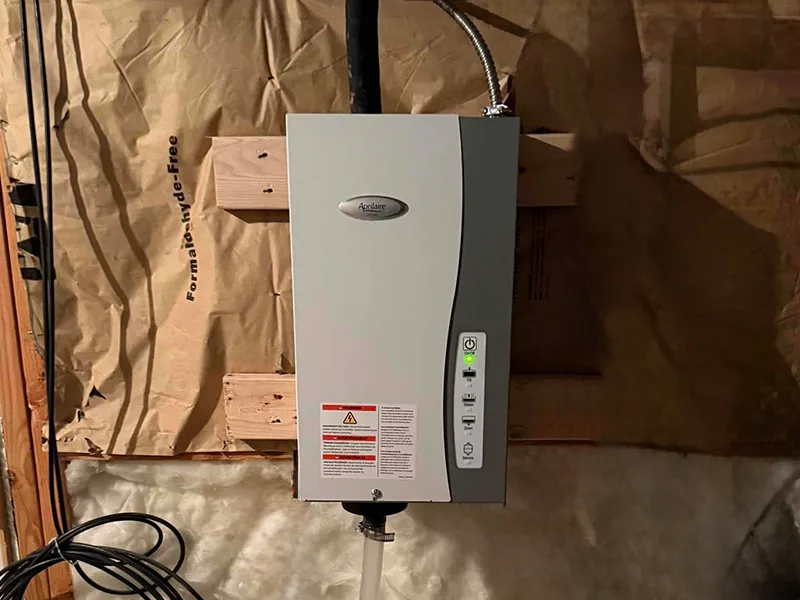
Humidifiers add moisture to air. Types: (1) Evaporative humidifiers (wicking) — water evaporates from a pad, energy-efficient but require frequent cleaning. (2) Impeller humidifiers — spray water into air, fast humidifying but can create white dust mineral residue. (3) Ultrasonic humidifiers — vibrate to create mist, small and quiet. (4) Steam humidifiers — boil water to create steam, add most moisture and can increase dust. (5) Whole-home humidifiers — integrate with furnace ducts, humidify all rooms without portable units. Dehumidifiers extract moisture from air using refrigeration cycles (cooling air until moisture condenses and drains away). Portable dehumidifiers cost $200-600 and suit single rooms. Whole-home dehumidifiers integrate with HVAC systems. For Utah winters, a whole-home humidifier is the gold standard solution.
Health impacts of improper humidity
Low humidity (below 30%) increases respiratory infections (viruses transmit more easily and survive longer). Dry air irritates nasal passages and sinuses, causing congestion and sinus infections. Dry skin becomes cracked and prone to infection. Dry air exacerbates asthma and allergies. High humidity (above 60%) promotes mold, which triggers respiratory problems, asthma, and allergic reactions. Dust mites multiply in humid air (they feed on mold and thrive at 70%+ humidity). Mildew and mold odors indicate unhealthy moisture. Maintaining 30-50% humidity prevents all these problems. Studies show that offices maintaining proper humidity have fewer sick days and better productivity. Utah residents during winter experience significant health benefits from adding humidity — reduced nosebleeds, fewer upper respiratory infections, better sleep.
Measuring and monitoring humidity
Indoor humidity is measured as relative humidity (RH) — the percentage of moisture in air relative to the maximum it can hold at that temperature. A simple hygrometer ($10-50) measures RH in your home. Smart thermostats often include humidity sensors. Measuring humidity in different rooms shows variations — bathrooms and kitchens typically have higher humidity than living areas. The ideal practice is to measure humidity during heating season (winter) and add a humidifier if needed. During summer in Utah, humidity is naturally low enough that dehumidification is rarely required unless you have basement moisture problems. Checking humidity weekly during winter helps you adjust humidifier settings and verify you're in the ideal 30-50% range.
Have questions? We're here to help.
Our licensed technicians serve Utah County, Salt Lake County, and surrounding areas.
Official Resources
Talk to a licensed technician about your specific situation — no pressure, no obligation.
Call (801) 407-9320