USGS Water Hardness: Understanding Utah's Hard Water Challenge
Why Utah water is some of the hardest in the nation and what that means for your home
USGS Water Hardness: Understanding Utah's Hard Water Challenge
Video walkthrough coming soon
What is water hardness?
Water hardness is the concentration of dissolved minerals, primarily calcium and magnesium, in water. Hard water itself isn't a health risk — calcium and magnesium are harmless to ingest. However, hard water causes mineral buildup (scale) in pipes, water heaters, dishwashers, and washing machines. It reduces soap and detergent effectiveness, making it harder to get clean and requiring more product. It leaves spots on dishes and buildup on fixtures. The USGS (United States Geological Survey) classifies water hardness on a scale from 0-60+ milligrams per liter (or 0-3.5+ grains per gallon, which is the American standard).
USGS water hardness scale
According to USGS classification: 0-60 mg/L (0-3.5 gpg) = soft water, 61-120 mg/L (3.5-7 gpg) = slightly hard, 121-180 mg/L (7-10.5 gpg) = moderately hard, 181-250 mg/L (10.5-14.5 gpg) = hard, and 250+ mg/L (14.5+ gpg) = very hard. Most of the United States has moderately hard to hard water. Utah is significantly harder than the national average. The Salt Lake City area water hardness is typically 200-250 mg/L (12-15 gpg). Some Utah areas, especially those with groundwater wells, can reach 300-350+ mg/L (17-20+ gpg) — among the hardest water in the nation.
Effects of hard water on your home and appliances
Scale buildup in your water heater reduces efficiency and lifespan — a water heater that should last 15 years might fail in 8-10 years with hard water. Mineral deposits in pipes gradually restrict water flow, reducing pressure over years. Dishwashers, washing machines, and coffee makers suffer similar scale buildup. Hard water reduces heating efficiency: a 1/2-inch layer of scale on a heating element can reduce efficiency by 40%. Plumbing repairs in hard-water areas are more frequent and expensive. The cost of treating hard water (through water softening or whole-home filters) is far less than the cost of premature appliance replacement and plumbing repairs.
Solutions for hard water
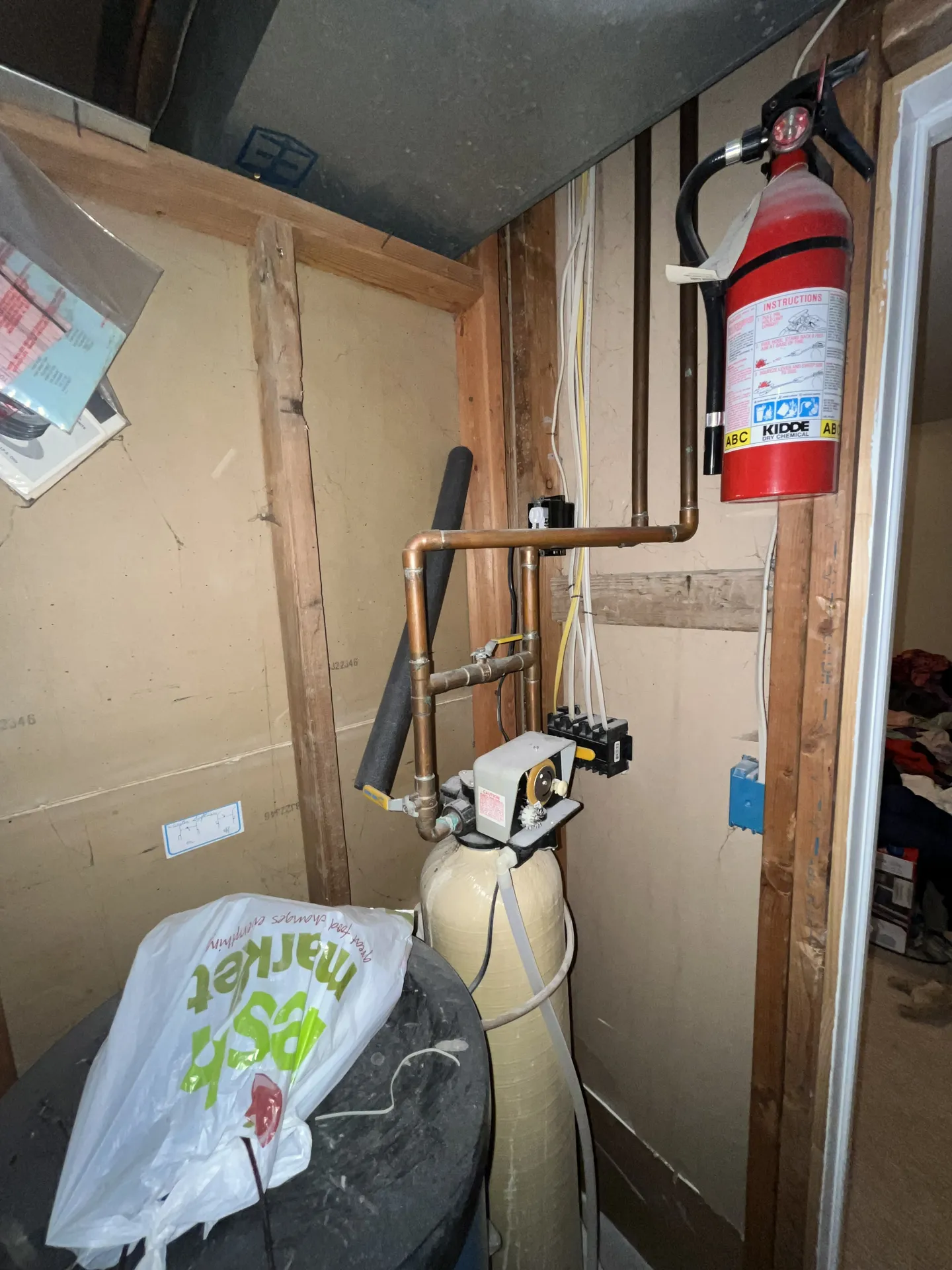
A water softener is the most common solution — it removes calcium and magnesium through ion exchange, replacing them with sodium (salt). This stops scale buildup entirely. Whole-home reverse osmosis systems remove nearly all minerals but are slower and waste more water. Alternative treatments like catalytic filters or magnetic devices have limited proven effectiveness. The best solution depends on your hardness level, water volume, and budget. For very hard Utah water (300+ gpg), a quality water softener is almost essential to protect appliances and plumbing.
Utah's unique water hardness challenges
Northern Utah's water comes from mountain snowmelt and groundwater that passes through limestone and mineral-rich geological formations. This creates naturally hard water in nearly all areas. Salt Lake City's culinary water (from mountain sources) is moderately hard. Secondary water (used for irrigation), drawn from local aquifers, is often even harder. Rural Utah areas relying on wells can have extremely hard water. Water softening is standard practice in Utah — it's not optional like in softer-water states. Planning your plumbing, water heater, and appliance purchases knowing you have hard water allows you to choose appropriate equipment and treatment.
Have questions? We're here to help.
Our licensed technicians serve Utah County, Salt Lake County, and surrounding areas.
Official Resources
Talk to a licensed technician about your specific situation — no pressure, no obligation.
Call (801) 407-9320