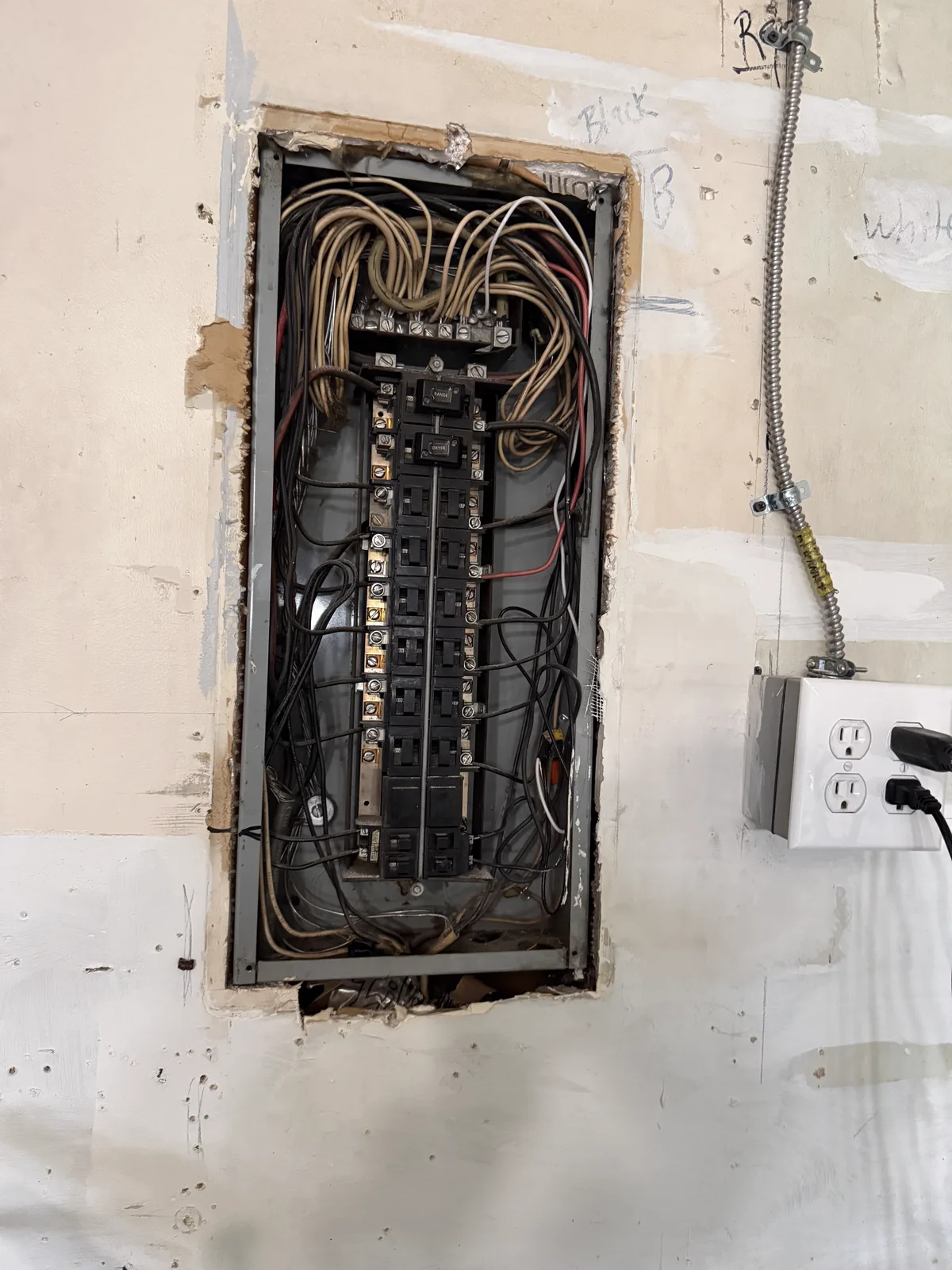
If your Utah home was built between 1955 and 1985, there's a meaningful chance — one in five, give or take — that the electrical panel hanging on your wall was built by Federal Pacific Electric (FPE) or Zinsco. Both brands have well-documented breaker-failure modes that have been linked to house fires for 40+ years. Both are still in active service in thousands of Utah homes today. Here's how to identify yours, what your insurance carrier already knows, and what your replacement options are.
How to Identify a Federal Pacific Panel
Open the panel door (the metal cover, not the dead front behind it — don't remove anything you have to unscrew). Look for these markers:
- Brand name “FPE” or “Federal Pacific Electric” on the inside of the door, on the dead front, or on a label near the main breaker.
- The word “Stab-Lok” — this is FPE's breaker line and the specific design that's been independently tested to fail.
- Breakers in alternating red/black colors with skinny rectangular handles. The FPE breaker handle is noticeably narrower than modern Square D or Eaton handles.
- Made in the U.S.A. stamps from the 1960s, 1970s, or early 1980s.
FPE manufactured panels until the early 1980s. Their failure mode: under sustained overload, the breaker fails to trip mechanically. Independent testing (most famously the Aronstein 2012 study) found a meaningful percentage of FPE breakers failed to interrupt current at 200%+ of rated load — the exact condition they're designed for. The result, in service: wires overheat, insulation melts, and arc faults develop into fires.
Insurance angle
Some insurers now decline or surcharge homes with FPE or Zinsco panels. If you're buying a home with one, negotiate the replacement into the deal — it's a known, fixable defect.
How to Identify a Zinsco Panel
Zinsco (also branded GTE-Sylvania, Sylvania-Zinsco, and occasionally Kearney) used a different but equally bad design. Markers:
- Brand name “Zinsco,” “Sylvania,” or “GTE Sylvania” on the panel door or inside.
- Bright multi-color breakers — blue, green, red. Modern panels are almost universally black or beige. Zinsco's color-coded breakers were specific to the era.
- Aluminum bus bars rather than copper. The aluminum bar is what corrodes and welds breakers in place under heat.
Zinsco's failure mode is mechanical: the breaker physically welds to the corroded aluminum bus bar over years of micro-arcing, and once welded, manually flipping the breaker handle to OFF doesn't actually disconnect power. Homeowners think they've shut off a circuit; they haven't.
What Insurance Carriers Are Doing About It
This is the part most homeowners don't know. Several major homeowner-insurance carriers have begun:
- Refusing to write new policies on homes with documented FPE Stab-Lok or Zinsco panels.
- Non-renewing existing policies when an inspection report flags the panel.
- Increasing premiums by $400–$1,200/year on retained policies until the panel is replaced.
If you're buying a Utah home with one of these panels, it'll show up on the inspection report. Many lenders won't fund the loan until replacement is scheduled or completed. Sellers either eat the $2,500–$4,500 panel-upgrade cost or take a price reduction. Either way the panel becomes the deal's variable.
The Replacement Decision: Now or At Sale?
If you're not selling for 5+ years, the math depends on:
- Insurance impact. Pull your policy declarations page. If your carrier has flagged the panel or hinted at non-renewal, replacement pays back in saved premium within 3–5 years.
- Capacity needs. Adding an EV charger, heat pump, hot tub, or kitchen remodel? You'll need 200A service anyway. Combine the upgrade with the panel replacement and the incremental cost is small.
- Active symptoms. Frequently tripping breakers, breakers that don't reset, hot panel doors, burning smell, scorch marks. Any of these = replace immediately. You're past the “risk” stage and into the “active failure” stage.
What a Utah Panel Upgrade Actually Costs
A standard 200A panel upgrade in Utah, 2026, all-in:
- Labor: $1,200–$1,800 (single day, two electricians + apprentice).
- Panel + breakers: $400–$800 depending on brand (Square D QO, Eaton CH, Siemens).
- Service entrance cable (if needed): $300–$700.
- City permit + inspection: $80–$180.
- Utility coordination with Rocky Mountain Power for meter pull/reset: included.
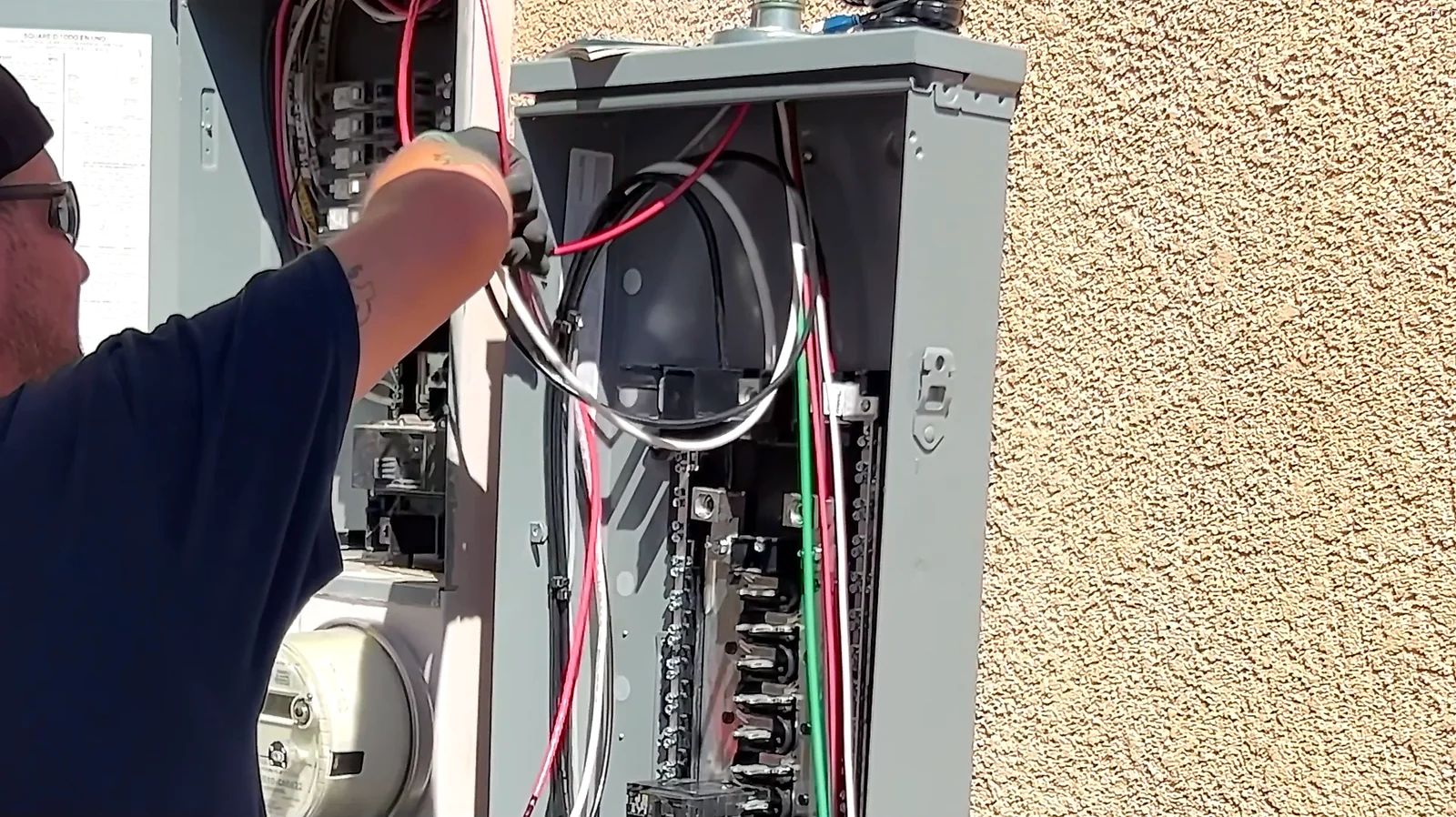
Total: $2,400–$4,500 for residential, depending on access, existing wiring condition, and whether the meter base needs replacement too. We pull the permit, schedule the RMP meter coordination, do the work in one day (power off ~6 hours), and pass city inspection before we leave.
What to Do Today
- Open your panel door (just the door, no screws) and check for the markers above. If you can't tell, snap a photo and email it to office@yourservicepros.us — we'll identify it for free.
- Pull your insurance policy and check for any panel-related exclusions or notices.
- If you have FPE Stab-Lok or Zinsco, schedule a free in-home assessment. We'll quote the upgrade in writing, list out which breakers you have today and what equivalents we'll install, and walk through any optional capacity additions (EV charger circuit, sub-panel for an addition, surge protection).
Read more about panel upgrades or request a free assessment. We do this work weekly across Utah County and Salt Lake County.
Related Electrical services
Need Help With This?
Our team is ready to help with expert electrical services across Utah.