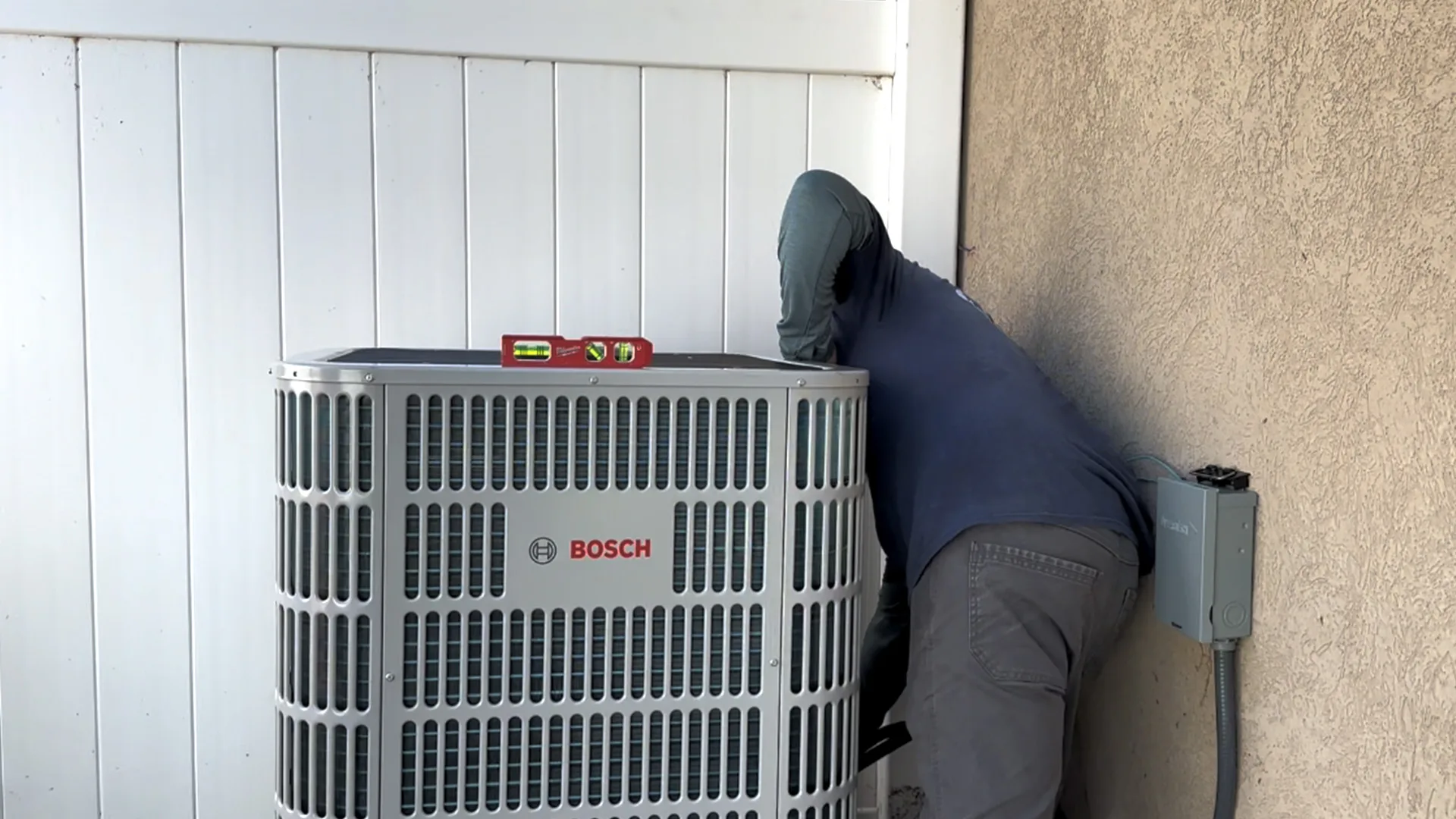
One of the most common mistakes Utah HVAC contractors make — and it happens on jobs every single week — is sizing an AC by “rule of thumb” instead of by Manual J load calculation. The result: oversized systems that cool too fast, never run long enough to dehumidify, and burn out compressors years early. Here's why a properly-sized 4-ton often beats an oversized 5-ton in a Utah home, what Manual J actually measures, and why we won't quote a replacement without one.
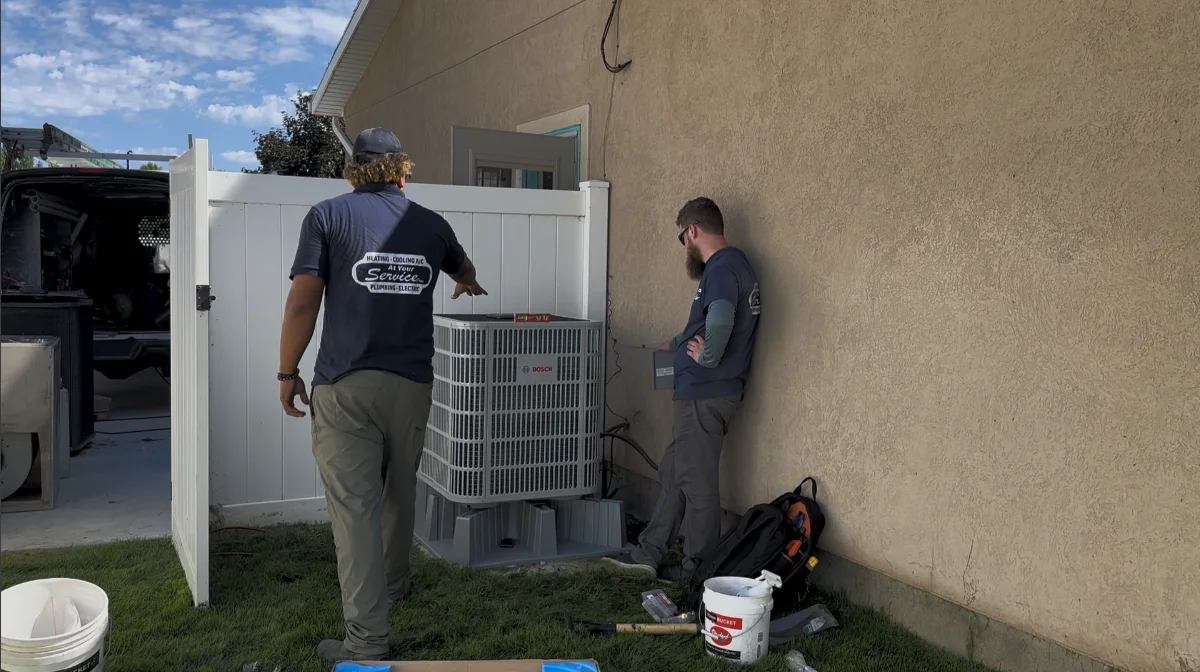
The 600-sq-ft-per-ton Rule (and Why It's Wrong)
Old-school sizing: 1 ton of cooling per 600 square feet of conditioned space. A 2,400 sq ft Utah home? “You need a 4-ton.” A 3,000 sq ft home? “5-ton it is.”
The rule has the right vibe but the wrong math. It ignores:
- Insulation R-values. A 2010 Utah home with R-49 attic and R-21 walls has half the heat gain of a 1985 home with R-19 attic and R-11 walls.
- Window area + orientation. West-facing windows in Lehi get afternoon solar gain that adds 30–50% to the cooling load. East and south orientation, much less.
- Elevation. 4,500–5,500 ft elevation in Utah means thinner air, which means lower latent (humidity) load and slightly lower sensible load. Your AC is doing less work per cubic foot than it would in Phoenix or Houston.
- Air leakage. A 2010 home with tight construction leaks 3–5 ACH50 (air changes per hour at 50 pascals). A 1980 home leaks 12–18 ACH50. The leakier home has dramatically higher load.
- Internal gains. Number of occupants, kitchen appliance usage, computers, lighting type. A four-person home with two work-from-home offices runs hotter than a two-person home that's empty during the day.
Bigger is not better
The most common sizing mistake we correct isn't undersizing — it's oversizing. A too-big AC cools the air fast but never runs long enough to dehumidify or even out room temperatures.
What Manual J Actually Calculates
Manual J is the industry-standard residential cooling and heating load calculation, published by ACCA (Air Conditioning Contractors of America). It's required by:
- ENERGY STAR new construction
- Most utility rebate programs (including Rocky Mountain Power)
- Every major manufacturer's installation warranty
- The 2021 IRC (International Residential Code) for permitted HVAC installations
The calculation accounts for ~20 inputs per room (or zone): square footage, ceiling height, window U-factor and SHGC, wall and roof R-values, infiltration rate, internal gains, ventilation, duct losses if any, climate-zone-specific design temperatures, and more. The output is BTU/hr cooling and heating load for each room and the home as a whole.
The whole-house cooling load determines AC tonnage (1 ton = 12,000 BTU/hr). A properly-run Manual J on a typical 2,400 sq ft Utah home built in 2010 often returns a load of 38,000–46,000 BTU/hr — which is a 3.5 to 4-ton system, not the 5-ton the rule of thumb would size.
What Happens When You Oversize
An oversized AC short-cycles: it cools the air near the thermostat fast, hits setpoint in 5–7 minutes, and shuts off. Then the rest of the house catches up by convection, the thermostat reads warm again, and it cycles back on. Repeat 8–15 times per hour on a hot day.
Three problems:
- Comfort tanks. Bedrooms at the end of duct runs never get enough cooling time to feel comfortable. The thermostat-room is fine; the bedrooms above the garage are 79°F at midnight. Sound familiar?
- Humidity climbs. AC dehumidifies as a side effect of running — cold coil condenses moisture out of the air. A unit that runs 5 minutes per cycle never gets long enough to dehumidify. Even in Utah's dry climate, July monsoon weeks have 50–65% RH and an oversized AC can leave you at 60–70% indoor RH while the thermostat reads 72°F. You feel clammy at the right temperature.
- Equipment dies early. Compressor startup is the most stressful event in the cooling cycle. 8–15 starts/hour on an oversized unit means 4–6× more starts than a properly-sized unit running steady cycles. Compressors rated for 80,000 starts hit that count in 7–9 years instead of 14–16.
The Common Utah Scenario: 5-Ton on a 3.5-Ton House
We see this all the time on jobs in Provo, Orem, Lehi, and the new builds in Saratoga Springs / Vineyard. The previous contractor sized by rule of thumb (or matched whatever was there before, which was also wrong), installed a 5-ton, and the homeowner has been complaining about uneven temperatures for years.
Replacing the 5-ton with a properly-sized 4-ton variable-speed system:
- Even cooling room-to-room (longer cycles distribute air properly)
- Better humidity control
- Quieter operation (4-ton outdoor unit is noticeably smaller and runs at lower fan speed for the same cooling output)
- Lower energy bill (less startup, less peak draw)
- 15–18 year expected life vs. 9–12 for the oversized unit
Counterintuitive but real: the smaller, properly-sized system performs better and costs less to run.
How to Tell If Your Current AC Is Oversized
- Cycle length. Stand outside on a 90°F afternoon. If the unit runs for less than 8–10 minutes per cycle, it's likely oversized.
- Room-to-room temp variation. Walk a thermometer through your house when the AC is running. More than 4°F variation between the master bedroom and the family room = poor distribution, often driven by oversizing.
- Humidity. A simple $10 hygrometer at home center. If indoor RH is over 55% in July with the AC running, the unit isn't running long enough to dehumidify.
- Service history. Capacitors and contactors lasting only 4–6 years instead of 10–12 is a soft signal of short-cycling stress.
What We Do on Every Replacement Quote
Every full-system replacement we quote in Utah includes:
- Manual J load calculation, room by room, using your actual home's data (insulation, windows, orientation, occupancy).
- Manual D ductwork sizing review — if your existing ducts are sized for the wrong tonnage, we'll show you the static-pressure measurements and recommend modifications.
- Equipment selection matched to the load number, not the previous tonnage. Sometimes that means downsizing; sometimes upsizing.
- Written quote with the Manual J PDF attached so you can see the math.
If a Utah HVAC contractor quotes you a system without doing a Manual J, ask them for the calculation in writing before you sign. If they can't produce it, you're getting rule-of-thumb sized equipment — which is fine if you don't mind replacing it again in 9 years.
Request a free in-home quote — Manual J included — or read our deeper Manual J guide if you want the technical detail before you book.
Related HVAC services
Need Help With This?
Our team is ready to help with expert hvac services across Utah.