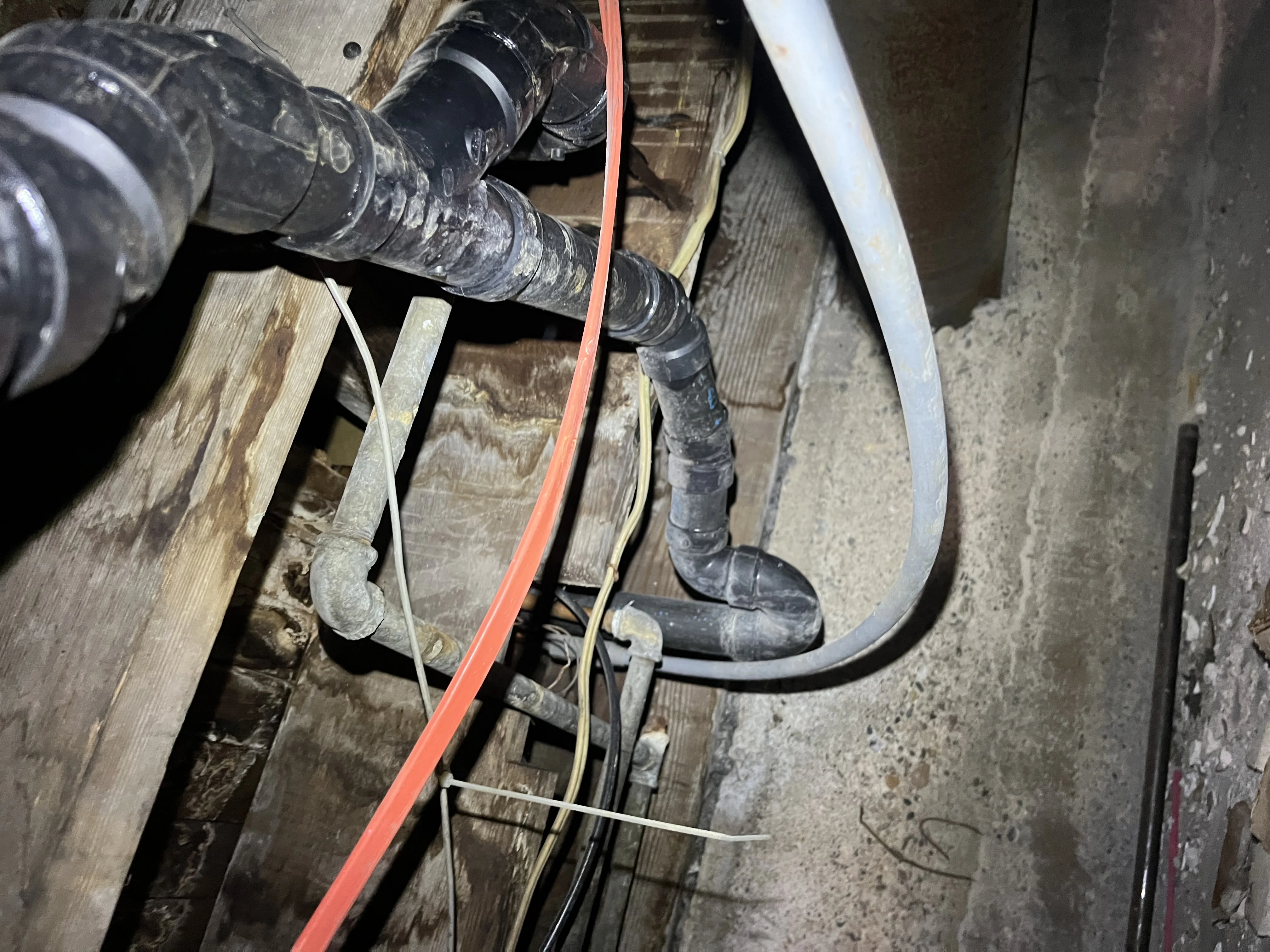
Sewer line repair in Utah typically costs $1,500–$4,000 for a spot repair (single break), $5,000–$15,000 for trenchless pipe lining (CIPP), and $7,000–$25,000+ for full traditional dig replacement. Final cost depends on the length of line affected, repair method, depth of pipe, soil type, and whether driveway, sidewalk, or landscaping needs to be removed and restored.
2026 Sewer Line Repair Cost in Utah
| Repair Method | Typical Utah Price | Best For | Disruption |
|---|---|---|---|
| Spot repair (single break) | $1,500–$4,000 | One isolated crack, root intrusion at a single joint, or impact damage | Small dig at the failure point (6–10 sq ft) |
| Trenchless pipe lining (CIPP) | $80–$250/linear ft (typical job $5,000–$15,000) | Long runs of cracked but intact line, multiple root intrusions, no full collapses | Two small access pits, lawn intact |
| Pipe bursting (trenchless replacement) | $100–$300/linear ft (typical $7,000–$18,000) | Failed or collapsed line where lining won’t work, want full pipe replacement without dig | Two small access pits, lawn intact |
| Traditional dig + replace | $7,000–$25,000+ | Deeply collapsed lines, alignment changes needed, or where trenchless access is impossible | Full open trench, lawn and any hardscape over the line gets torn up |
| Sewer camera inspection (diagnostic) | $250–$450 | Before deciding on a repair method — confirms exactly what is wrong and where | None (often waived when bundled with a repair) |
Source: At Your Service Pros pricing data based on Utah County and Salt Lake County sewer jobs completed Spring 2026. Driveway/sidewalk patching (+$2,000–$5,000), permit fees ($200–$500), and city lateral coordination handled as separate line items.
Watch out for "spot repair" bait pricing
If a contractor quotes $1,200 for a spot repair without a camera inspection first, walk away. The cheapest fix is also the wrong fix if the rest of the line is failing — you’ll pay for the spot repair, then pay again 6 months later when the next section collapses. A real camera inspection costs $250–$450 and tells you exactly which method to use. We waive the inspection fee when the repair gets approved.
What Drives Sewer Line Repair Cost in Utah
1. Length of damaged line
A single 4-foot section that needs a spot fix is cheap. A 60-foot run from the house to the city lateral that needs full replacement is expensive. Most Utah residential lines run 30–80 feet from the foundation cleanout to where they tie into the city sewer at the street. The full length doesn’t always need work ' + EMDASH + ' a camera inspection tells you exactly how many feet are affected.
2. Depth of the pipe
Utah residential sewer lines typically sit 3–6 feet deep, but along bench properties (Sandy, Bountiful, anywhere with sloped lots) and around mature trees we sometimes find them at 8–12 feet. Every additional foot of depth roughly doubles the excavation time and cost on a traditional dig, which is one of the reasons trenchless methods win on cost when the line is deep ' + EMDASH + ' you only need to dig two small access pits regardless of depth.
3. Soil type and Utah’s clay belt
Most of the Wasatch Front sits on expansive clay soils that swell when wet and shrink when dry. This continuous movement is the #1 cause of joint failures on older lines and is why cast iron and clay tile sewer pipes from the 1950s–1970s era are failing now. Clay soil also makes excavation slower and more expensive because trench walls collapse without shoring. Sandier soils along the Jordan River corridor are faster to dig.
4. Driveway, sidewalk, or landscaping in the way
If your sewer line runs under your driveway, expect $2,000–$5,000 added for concrete cut and patch. Under a public sidewalk, the city may require ADA-compliant restoration with a separate permit. Mature trees over the line ' + EMDASH + ' a common Utah problem with cottonwoods, sycamores, and locust trees ' + EMDASH + ' can add $1,500–$4,000 if root extraction or tree removal is needed.
5. City lateral coordination
In most Utah cities, the homeowner owns the sewer line from the house all the way to the city main at the street, including the tie-in at the city lateral. If the failure is at or near the tie-in, the city may require a permit and inspection ($200–$500), and in some jurisdictions (Salt Lake City, Provo) they require a licensed contractor with a specific endorsement. We handle the city coordination as part of every job.
How to Tell Which Repair Method You Actually Need
Start with a camera inspection
A push camera or motorized crawler sends video down the line. The tech sees exactly where the damage is, what type (cracks, root intrusion, joint separations, full collapses), and how much of the line is affected. Without this step, every quote is a guess.
Single break + rest of line healthy = spot repair
If the camera shows one isolated failure and the rest of the line looks intact (especially if the line is under 20 years old), a spot repair is the right call. Total time on site is usually less than a day.
Multiple cracks + line still structurally sound = trenchless lining (CIPP)
If the line has several cracks or root intrusions but isn’t collapsed or severely bellied, CIPP lining is usually the best value. A resin-saturated felt liner is pulled into the existing pipe, inflated, and cured in place — creating a new pipe inside the old one. Lifespan: 50+ years. Lawn stays intact.
Collapsed line + need full replacement = pipe bursting (trenchless)
When lining isn’t viable (heavy bellies, full collapses, undersized pipe) but you still want trenchless, pipe bursting pulls a new HDPE pipe through the existing line while breaking the old pipe outward into the surrounding soil. Two small access pits, no full dig.
Alignment change needed = traditional dig + replace
If the existing line has the wrong slope, ties into the city main at a bad angle, or needs to be rerouted around a new addition, traditional excavation is the only path. We use the dig as a chance to install a properly sized HDPE pipe and a sweep cleanout, so future maintenance is easy.
Common Utah Causes of Sewer Line Failure
Three things cause most of our Utah sewer repairs:
- Tree root intrusion. Cottonwoods, sycamores, and locust trees are the worst offenders. Roots find the smallest joint gap, grow into the pipe seeking water, and either crack the pipe outward or build up a complete blockage. Often the homeowner has no idea until the line backs up.
- Old cast iron and clay tile pipe. Homes built 1950s through mid-1970s in Salt Lake City, Sandy, Bountiful, Murray, and older Provo neighborhoods often still have original cast iron sewer lines. Cast iron rots from the inside out over 50–70 years and clay tile joints separate as the clay soil shifts. Most failing lines we see now fall in this category.
- Expansive soil movement. Utah’s clay belt expands when wet and contracts when dry. Continuous movement breaks pipe joints and creates bellies (low spots in the line that hold standing water). This is a slow-developing problem ' + EMDASH + ' you' + RSQUOTE + 'll see it on a camera inspection long before the line backs up.
Bottom Line
The right repair method depends entirely on what the camera inspection shows. Spot repairs ($1,500–$4,000) work for single failures on otherwise-healthy lines. Trenchless lining ($5,000–$15,000) is the best value for multi-point damage where the line is still structurally sound. Pipe bursting ($7,000–$18,000) is the trenchless option when lining won’t work. Traditional dig replacement ($7,000–$25,000+) is for collapses, alignment changes, or where access doesn’t allow trenchless. Skip any contractor who quotes a method without a camera first.
We run camera inspections at $250" + ENDASH + "$450 (waived when bundled with a repair), give you the video on a thumb drive, and quote the right method based on what the line actually looks like. Learn more about our sewer line services or book a camera inspection to find out exactly what your line needs.
Related Plumbing services
Need Help With This?
Our team is ready to help with expert plumbing services across Utah.