Tankless vs Tank Water Heater for Riverton, Utah Homes
Tankless is more efficient and lasts longer, but only if the install is done right. Here's how the math actually plays out in Utah.
Quick answer
Tankless vs Tank Water Heater for a Riverton home — the right choice depends on your home's specific conditions (4,440 ft elevation, existing ductwork, climate exposure). At Your Service Pros models both options at the free in-home estimate using Riverton climate data and gives you a written side-by-side quote before any work begins. Licensed and insured in Utah; 473+ verified Google + Yelp reviews. Call (801) 407-9320 or book online.
Side by side for Riverton
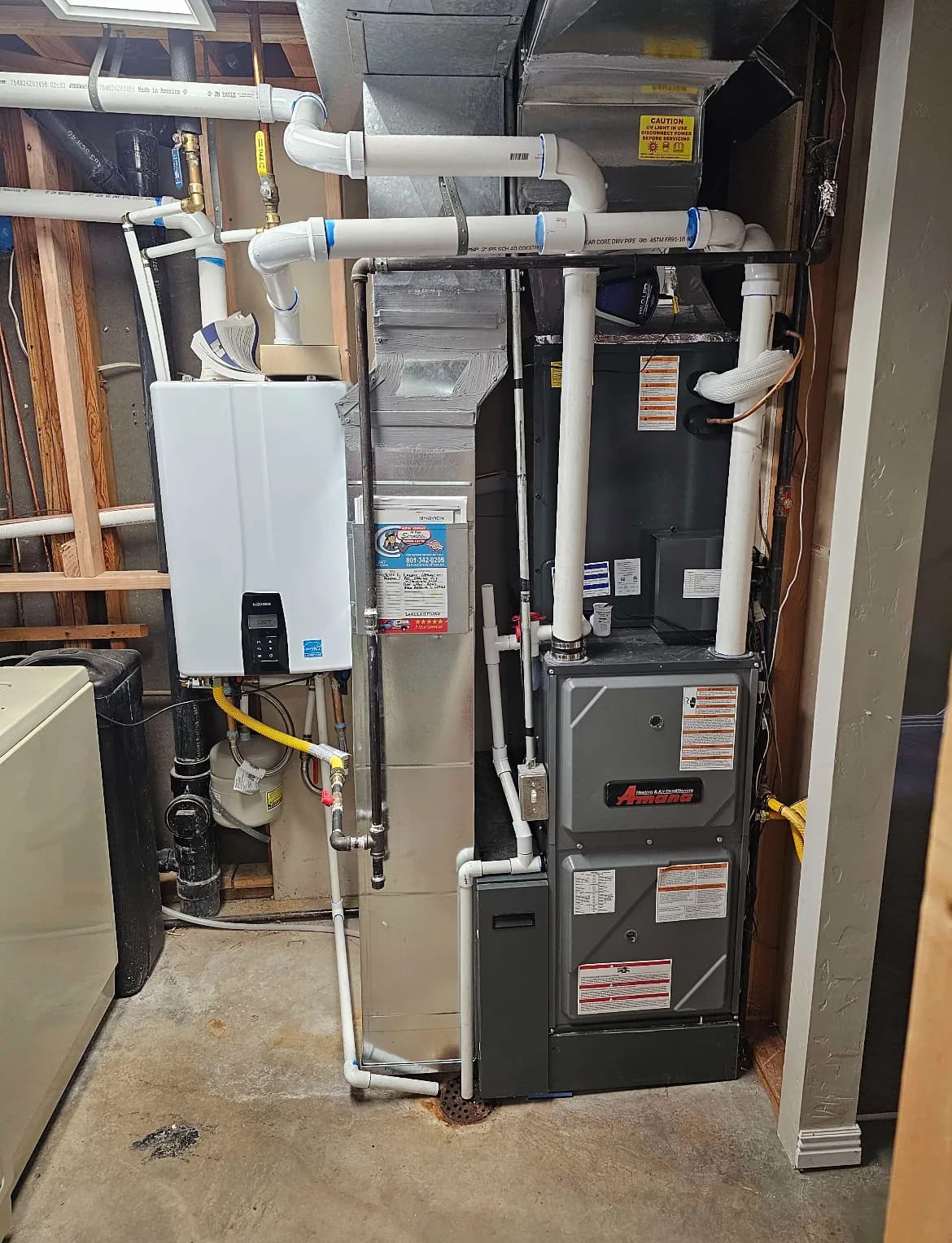
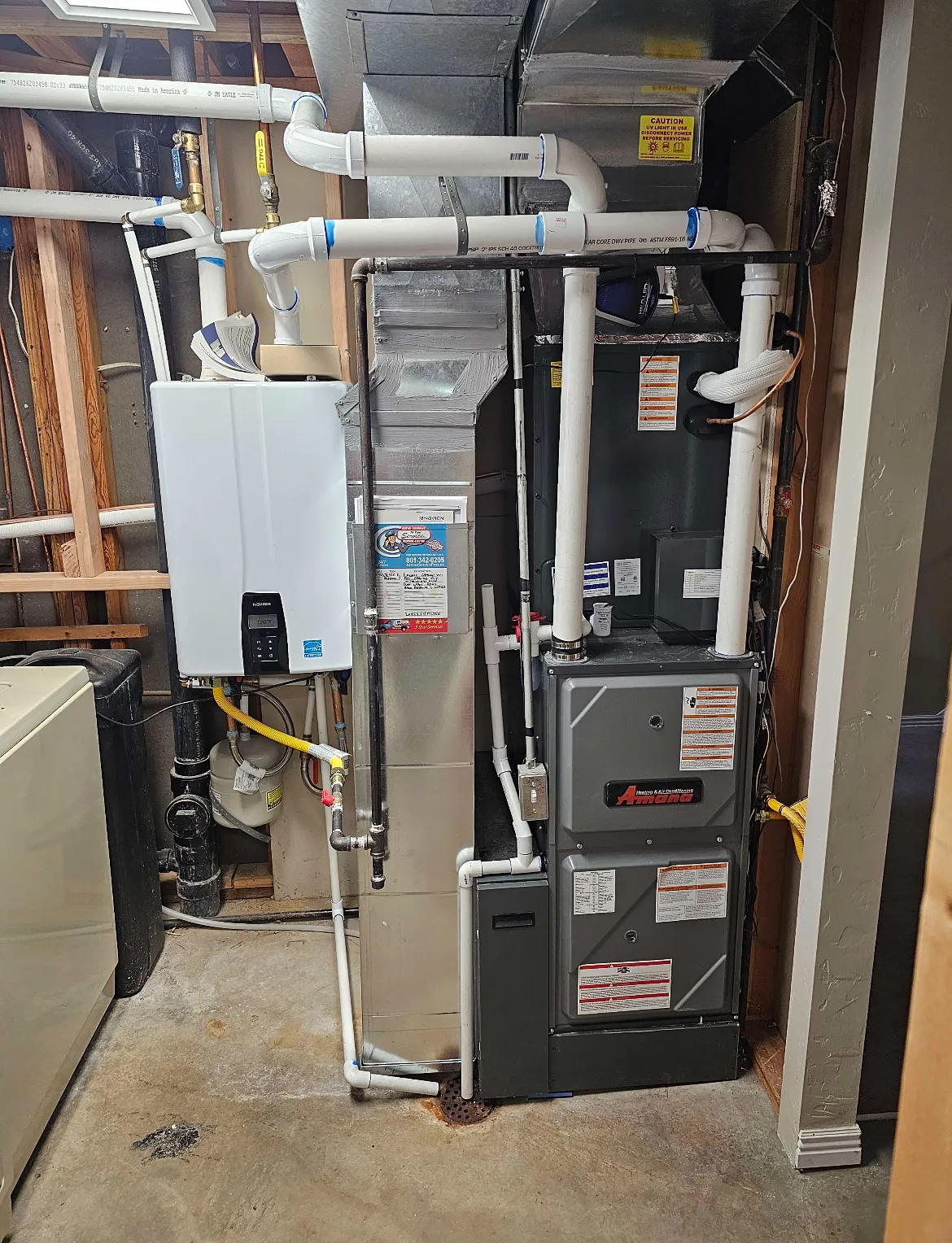
Tankless
Heat water on demand, no storage
Best for: Homes with growing families, homes that frequently run hot water tight (multiple bathrooms, soaking tubs), homeowners staying 10+ years.
Pros
- 20-year lifespan (2x a tank)
- Endless hot water — no running out mid-shower
- Saves space — wall-mounted, no 50-gallon footprint
- Energy Factor 0.82-0.96 (vs 0.62-0.65 tank gas)
Cons
- — Higher install cost — usually needs a larger gas line (3/4" min, often 1")
- — Cold-water sandwich effect on short-draws (mitigated with a buffer tank)
- — Annual descaling required in Utah's hard water (15-25 grains)
- — Capacity matters — undersized tankless can't keep up with two showers + dishwasher
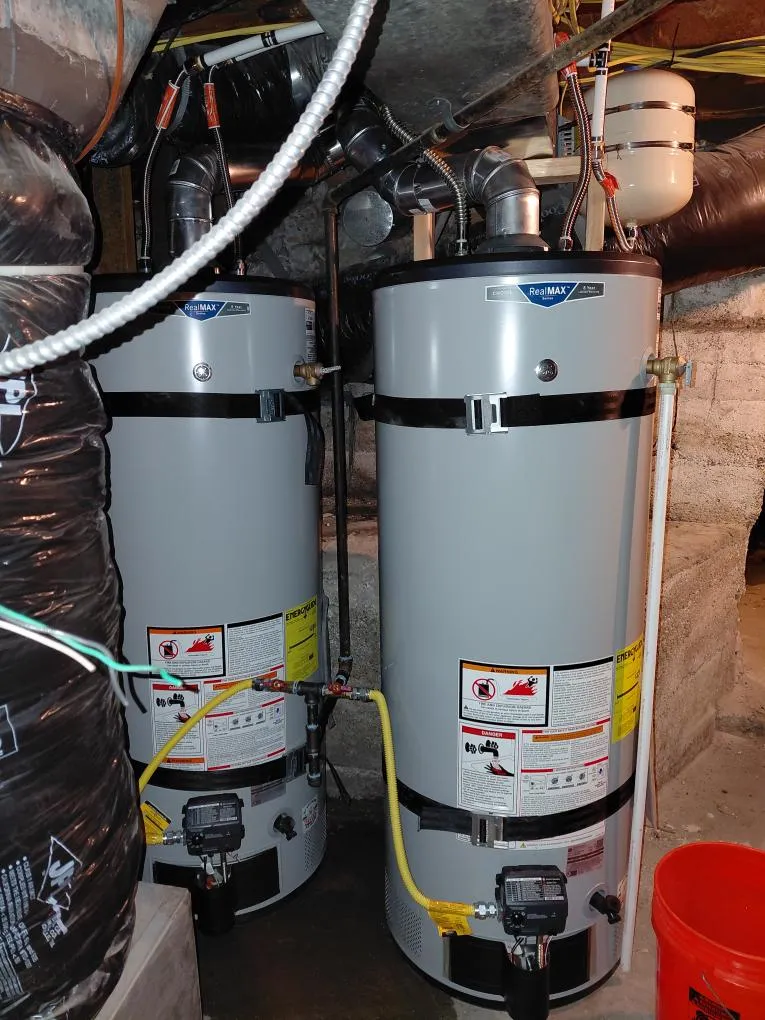
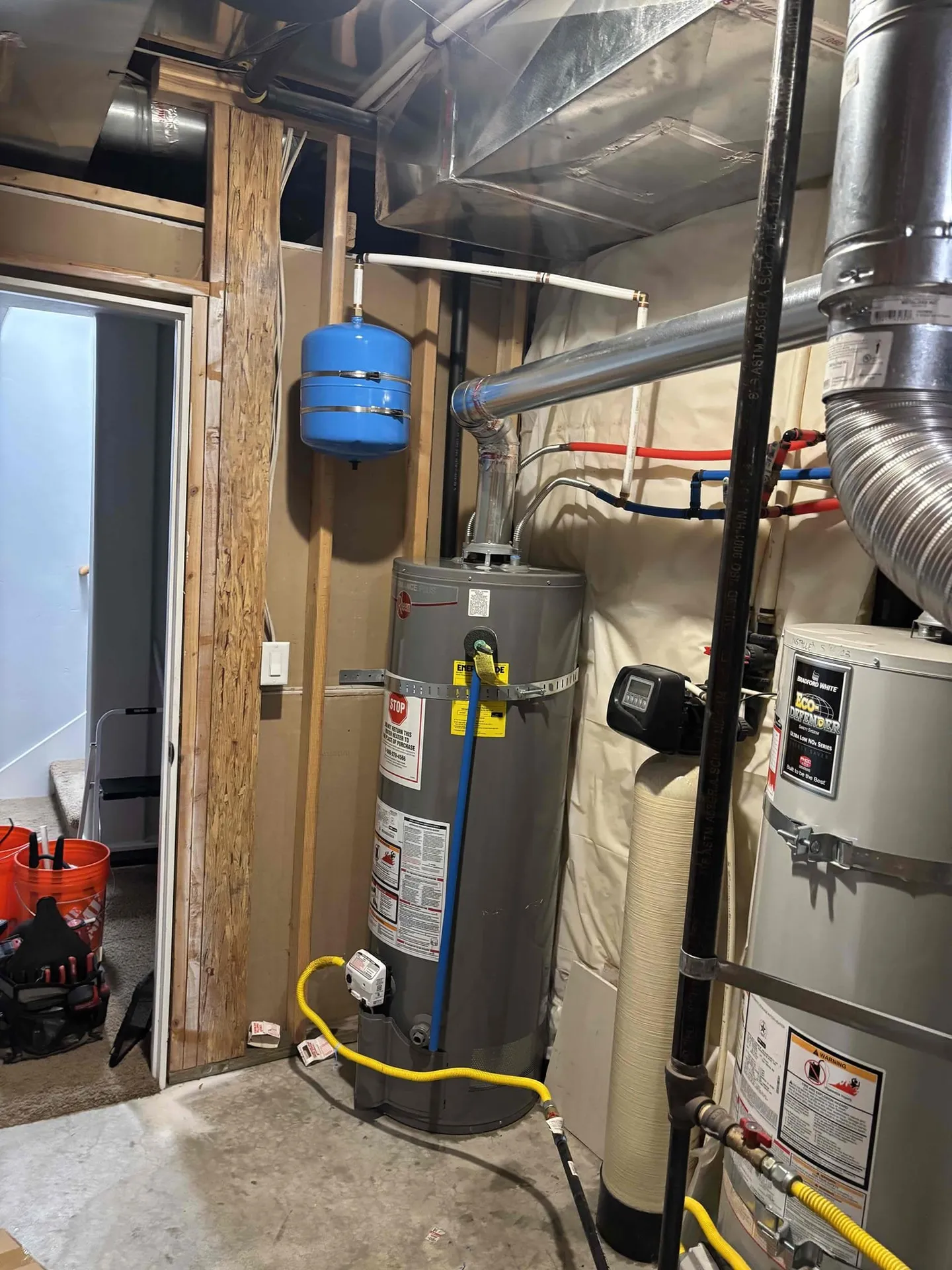
Tank
Traditional 40-50 gallon storage tank
Best for: Tight budgets, smaller households (1-2 people), homes that fit current demand fine, or rentals where upfront cost matters more than lifespan.
Pros
- Lowest upfront cost — usually half a tankless
- Simpler install — uses existing gas line and venting
- Familiar — every plumber can service one
- Some models recover in 30 min for back-to-back showers
Cons
- — 10-12 year typical lifespan in Utah's hard water
- — Standby loss — keeps 50 gal hot 24/7 whether you use it or not
- — Footprint — takes 24"x60" of floor space
- — Sediment buildup — hard water accelerates tank corrosion
Our take for Riverton
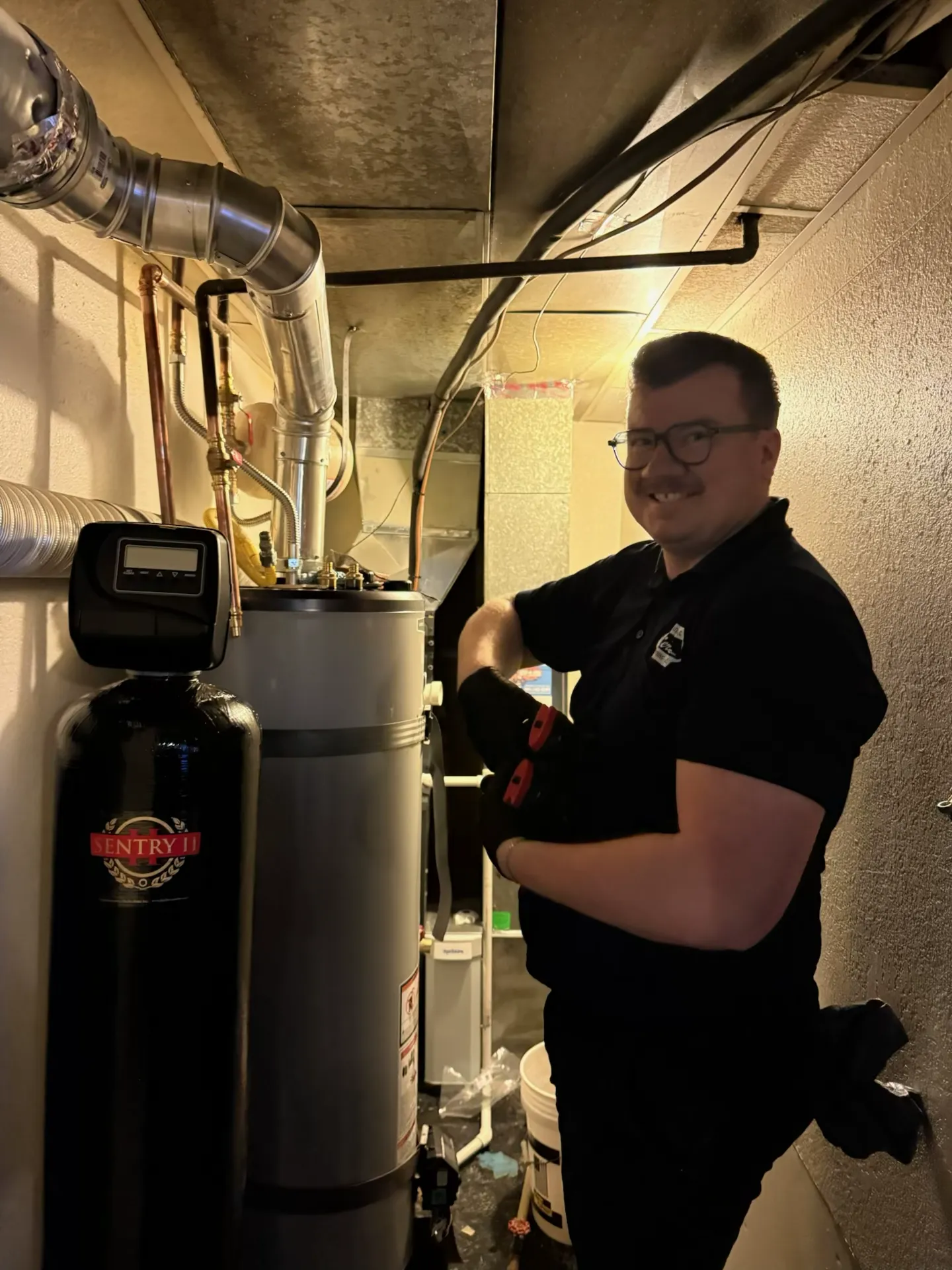
Pair the install with a water softener. Utah's 15-25 gpg hard water is the #1 killer of both types — a softened-water tank can hit 15+ years, a softened-water tankless 20+. If gas line capacity is already 3/4" or larger and you have growing demand, tankless is the long-term math. If you're keeping it simple and budget-conscious, a high-efficiency 50-gal gas tank is still a great install.
Tankless vs Tank Water Heater FAQ — Riverton edition
Which option fits a typical Riverton home best?
For most Riverton homes, we model both options at the in-home estimate using actual conditions (square footage, ductwork, insulation, 4,440 ft elevation, climate zone). No two homes are identical and the right answer often surprises people — that's why we never lock in a recommendation without seeing the house.
Do you install both options in Riverton?
Yes — we install and service both sides of this comparison across Riverton and Salt Lake County. Free in-home estimate, written fixed-price quote before any work begins. transparent dispatch fee waived on approved repair on repair-side visits.
Do tankless units pay back the extra cost?
Yes, if you stay 10+ years. The energy savings are real (10-15% lower water heating bill), the lifespan is 2x, and you skip the second replacement cycle that a tank would force. If you're flipping the house in 3 years, the math doesn't work — go tank.
Why does the gas line need to be bigger for tankless?
Tankless units fire at 150,000-199,000 BTU/hr to heat water instantly — a tank fires at 40,000 BTU and just slow-warms a reservoir. Existing 1/2" gas lines often can't deliver that gas volume to the unit. An upgrade to 3/4" or 1" line is part of most retrofit jobs.
At a glance — for Riverton homeowners
Quick visual of who each option fits.
Tankless
Heat water on demand, no storage
Best for
Homes with growing families, homes that frequently run hot water tight (multiple bathrooms, soaking tubs), homeowners staying 10+ years.
Tank
Traditional 40-50 gallon storage tank
Best for
Tight budgets, smaller households (1-2 people), homes that fit current demand fine, or rentals where upfront cost matters more than lifespan.
Local coverage
Serving Riverton and all of Salt Lake County — same-day
Get a free in-home water-heater consultation in Riverton
We model both options at the free in-home estimate and give you a written, fixed-price quote before any work begins. Same-day estimates across Salt Lake County.