What is Pressure Regulator?
Plain-English explanation from a licensed Utah HVAC, plumbing, and electrical contractor.
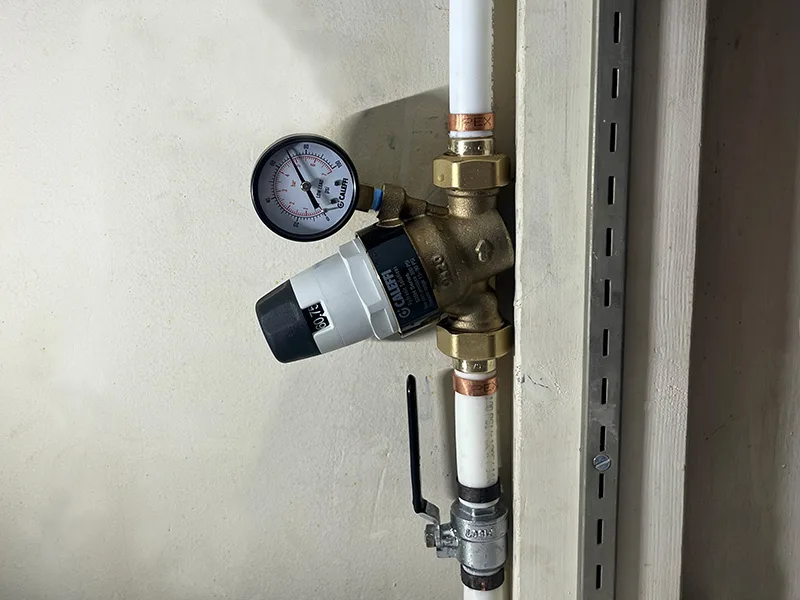
A pressure-reducing valve is a small device on the main water line that drops incoming city-water pressure (often 90–150 psi in Utah) down to a safe 55–75 psi for household plumbing.
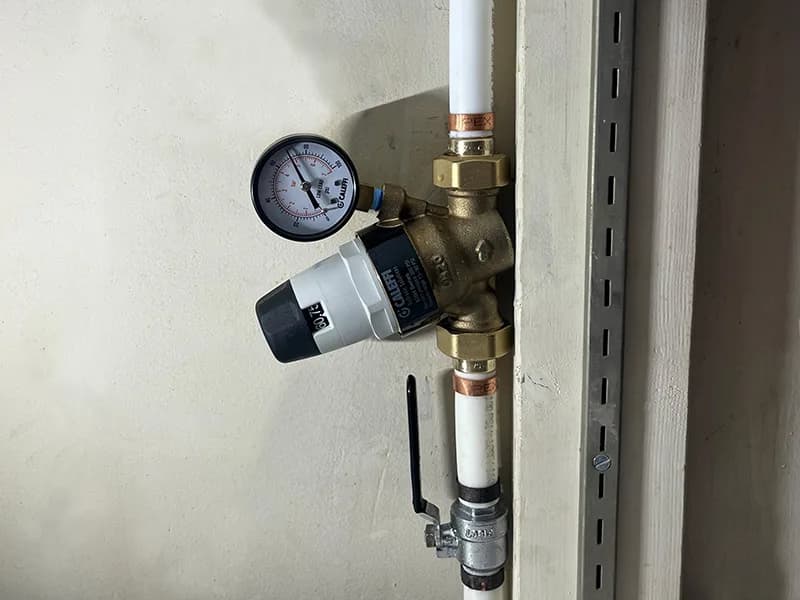
Full Definition
A pressure-reducing valve (PRV) is a spring-loaded valve that limits downstream water pressure to a setpoint regardless of upstream variation. It's installed on the main water service line just past the meter. Most residential plumbing fixtures and water heaters are designed for 40–80 psi. Above 80 psi, IRC requires a PRV. Above 100 psi, fixtures, appliances, and pipe joints fail prematurely.
Many Utah homes receive 100–150 psi from municipal mains — well above the 80 psi code maximum. High pressure damages dishwasher and washing machine inlet valves, fails ice-maker lines, blows water heater T&P valves, and accelerates pinhole leaks in copper. A $200–$400 PRV install protects thousands in fixtures.
Common Questions
How do I check my home's water pressure?
Attach a pressure gauge (sold at home centers for $10–$15) to an outdoor spigot or laundry standpipe. Run cold water momentarily to clear air, then read static pressure. Above 80 psi requires a PRV; 55–65 psi is ideal.
How often do PRVs need replacement?
Most last 7–15 years before the internal seat or diaphragm fails. Symptoms include slowly rising downstream pressure, water hammer, and intermittent T&P valve weeping at the water heater.
Recent PLUMBING work in Utah
A few installs and service calls from the AYSP crew.
Have a question we didn't answer?
Talk to a licensed tech — no charge for phone questions.