What is Tankless Water Heater?
Plain-English explanation from a licensed Utah HVAC, plumbing, and electrical contractor.
A tankless water heater heats water on demand as you turn on a hot-water tap, instead of constantly keeping 40–80 gallons hot in a storage tank.
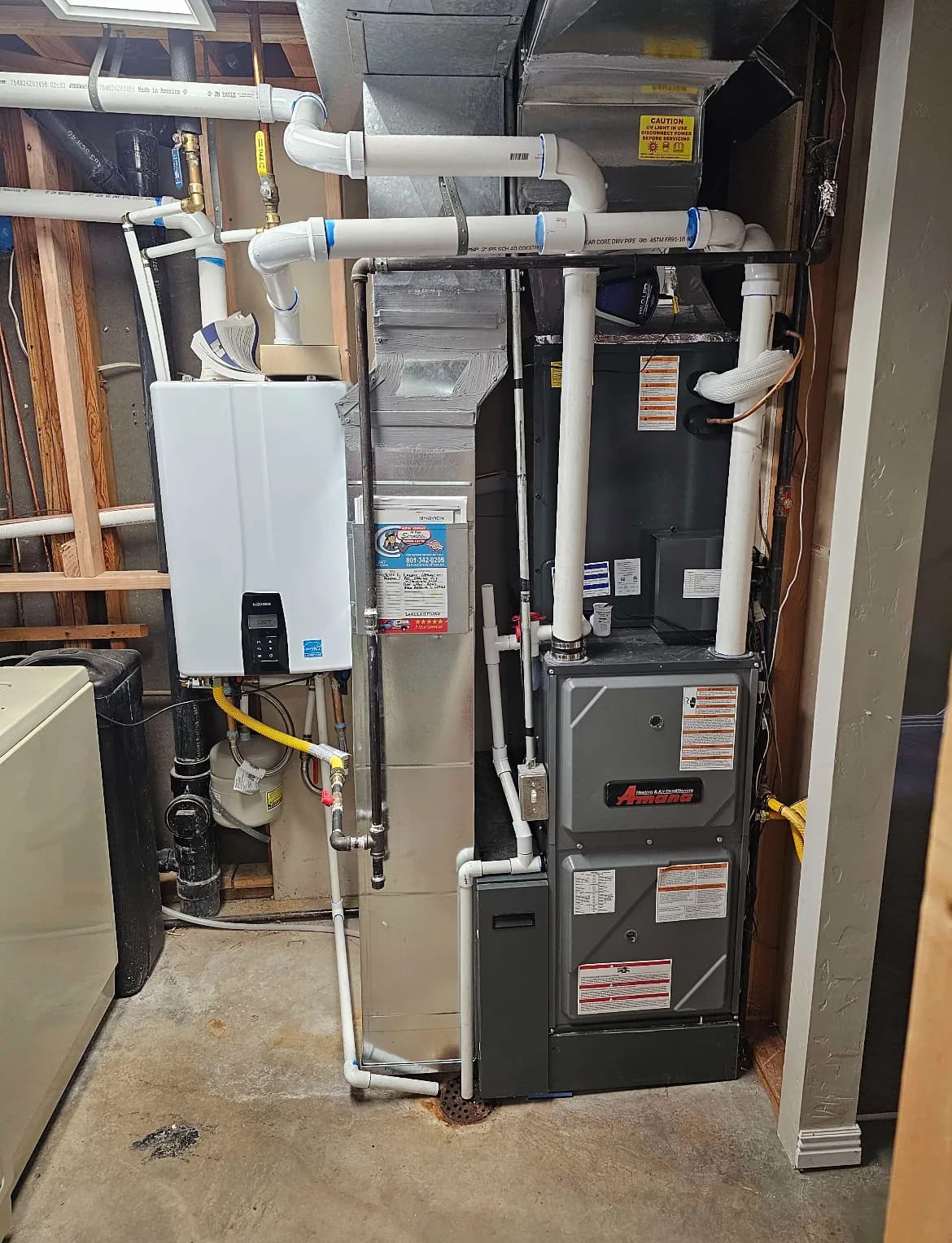
Full Definition
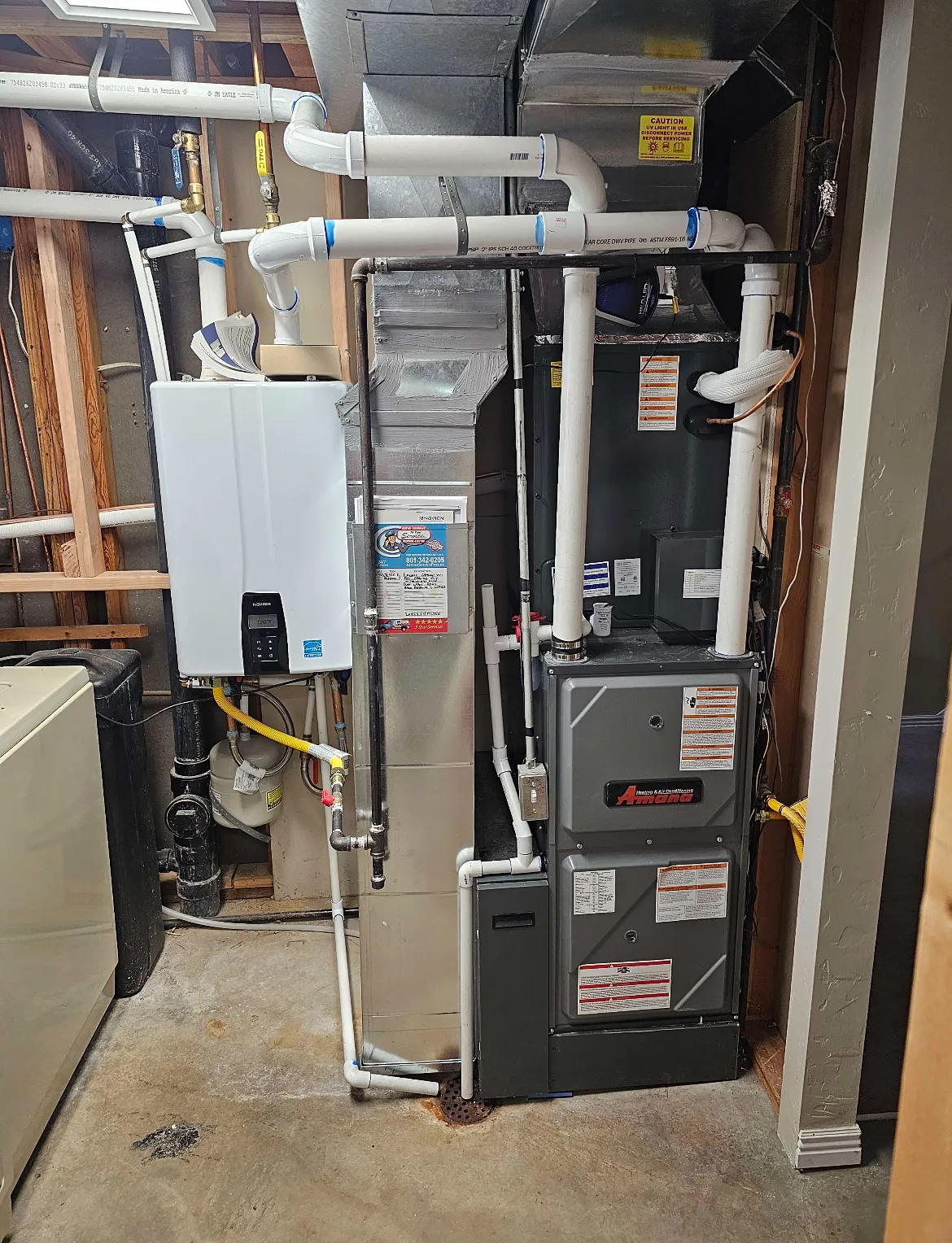
A tankless (a.k.a. on-demand or instantaneous) water heater contains no storage tank. When a hot-water tap opens, a flow sensor activates a high-output gas burner or electric heating element that warms the water as it passes through a heat exchanger. Output is rated in gallons-per-minute (gpm) at a specified temperature rise — typical residential gas tankless units deliver 6–10 gpm at 70°F rise, enough for whole-home use including multiple simultaneous fixtures.
Tankless eliminates standby heat loss (the 5–10% of fuel a tank uses just keeping itself hot), provides endless hot water (no 'tank cold' surprise during back-to-back showers), and lasts 18–25 years versus 10–12 for tanks. Federal 25C tax credit covers up to $600 of the install cost.
Common Questions
Will a tankless work for my whole house?
Almost always yes in Utah — a properly sized 199,000 BTU condensing tankless delivers 8–10 gpm even with our 40°F incoming groundwater. That's enough for two showers plus a dishwasher running simultaneously.
Are tankless water heaters worth the upgrade cost?
On a like-for-like swap, payback through energy savings is 8–12 years. The bigger benefit is endless hot water, recovered closet space, longer lifespan, and higher resale appeal. Many Utah customers feel the comfort upgrade is worth it even before energy savings.
Related Terms
BTU
A BTU is the standard unit of heat in U.S. HVAC — one BTU is the energy needed to raise one pound of water by one degree Fahrenheit. Furnaces and ACs are rated in BTU per hour.
AFUE
AFUE is the gas-furnace efficiency rating — it tells you what percentage of the fuel you pay for actually becomes usable heat in your home versus what escapes up the flue.
Recent PLUMBING work in Utah
A few installs and service calls from the AYSP crew.
Have a question we didn't answer?
Talk to a licensed tech — no charge for phone questions.