What is Neutral Bar?
Plain-English explanation from a licensed Utah HVAC, plumbing, and electrical contractor.
The neutral bar is the metal bus inside your electrical panel where all the white (neutral) wires terminate — it must be bonded to ground only at the main service panel, never at a subpanel.
Full Definition
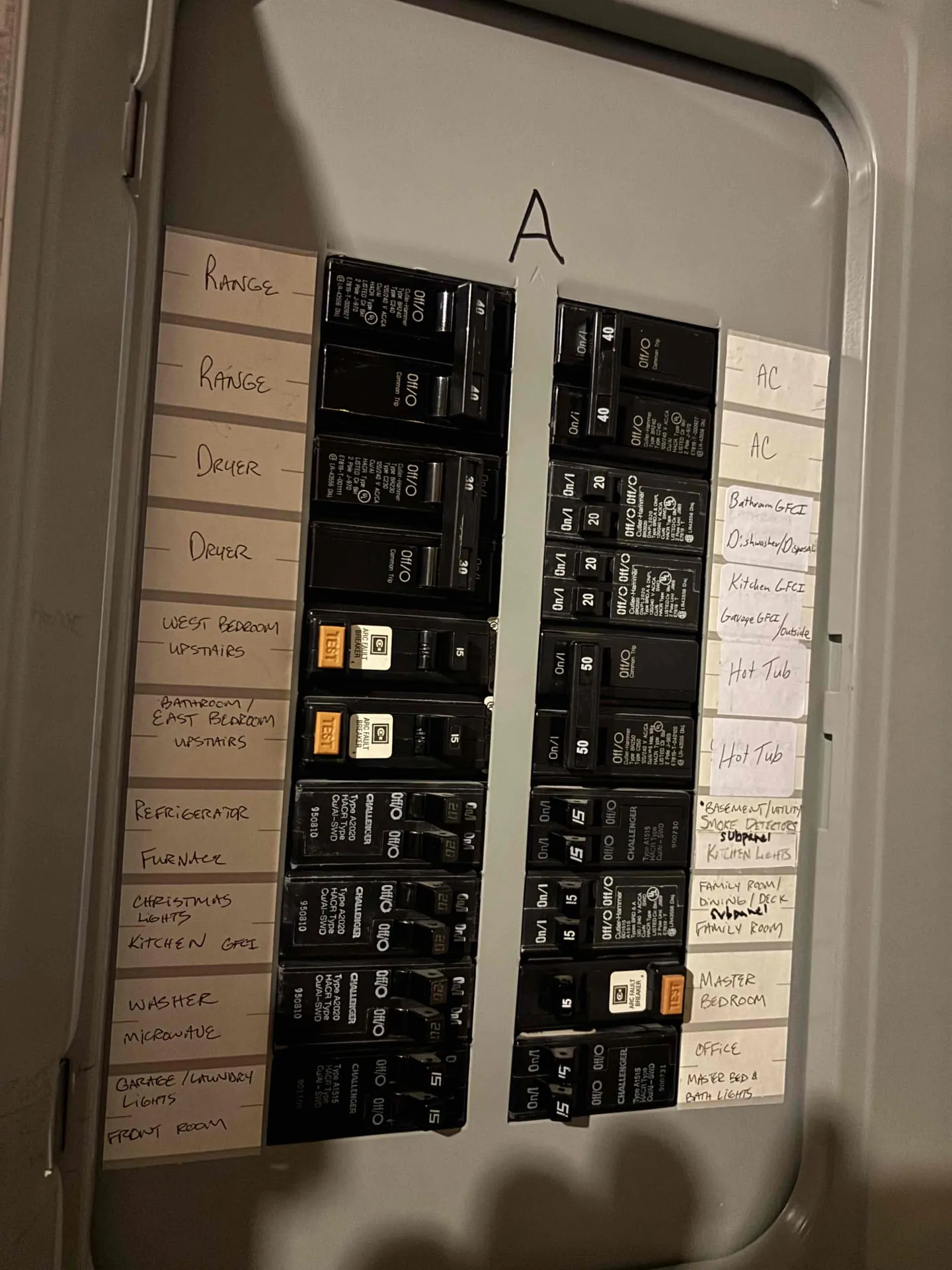
The neutral bar (or neutral bus) is a metal bar with screw terminals inside the panel for landing all neutral conductors. Per NEC, the neutral bar must be bonded (electrically connected) to ground only at the service-entrance equipment — the main panel — via the main bonding jumper. At subpanels, the neutral bar must be isolated from ground. Mis-bonded subpanels create dangerous parallel ground paths and are a common Code violation found during inspections.
Improperly bonded neutral bars are a serious safety issue — they cause stray current on metal water pipes, GFCI tripping, and shock hazards. Fixing it correctly during a panel upgrade or inspection is critical. Bonding mistakes from prior installers are one of the most common things we correct in Utah homes.
Common Questions
Why do neutrals and grounds get bonded in only one place?
If neutrals and grounds are bonded in multiple places, neutral return current flows on the ground wires and metal piping — creating shock hazards and inducing electromagnetic interference. The single-bond rule ensures neutral current only flows on neutral wires.
Can a homeowner check for proper bonding?
Not safely — it requires opening the panel and measuring continuity with the main breaker off. We include a bonding inspection in every panel-upgrade quote.
Related Terms
Main Electrical Panel
The main panel (or 'service panel,' 'load center,' 'breaker box') is the central electrical distribution point in your home — where utility power comes in, is metered, and is divided into the individual circuit breakers that protect each room and appliance.
Subpanel
A subpanel is a smaller electrical distribution panel fed from your main panel — used to extend service to a garage, basement, addition, or detached shop without rerouting every circuit back to the main.
Electrical Grounding
Grounding is the safety system that connects your electrical panel to the earth via ground rods, water pipe, or building steel — it provides a low-impedance path for fault current to trip a breaker fast during a short circuit.
AFCI and GFCI Protection
AFCI and GFCI are two types of advanced circuit breakers that protect against different electrical hazards — AFCI prevents fires from arcing wires, GFCI prevents shocks from ground faults.
Recent ELECTRICAL work in Utah
A few installs and service calls from the AYSP crew.


Have a question we didn't answer?
Talk to a licensed tech — no charge for phone questions.