What is Static Pressure?
Plain-English explanation from a licensed Utah HVAC, plumbing, and electrical contractor.
Static pressure is the resistance your blower has to push against to move air through the duct system — too high and the blower struggles, efficiency drops, and the system runs hot.
Full Definition
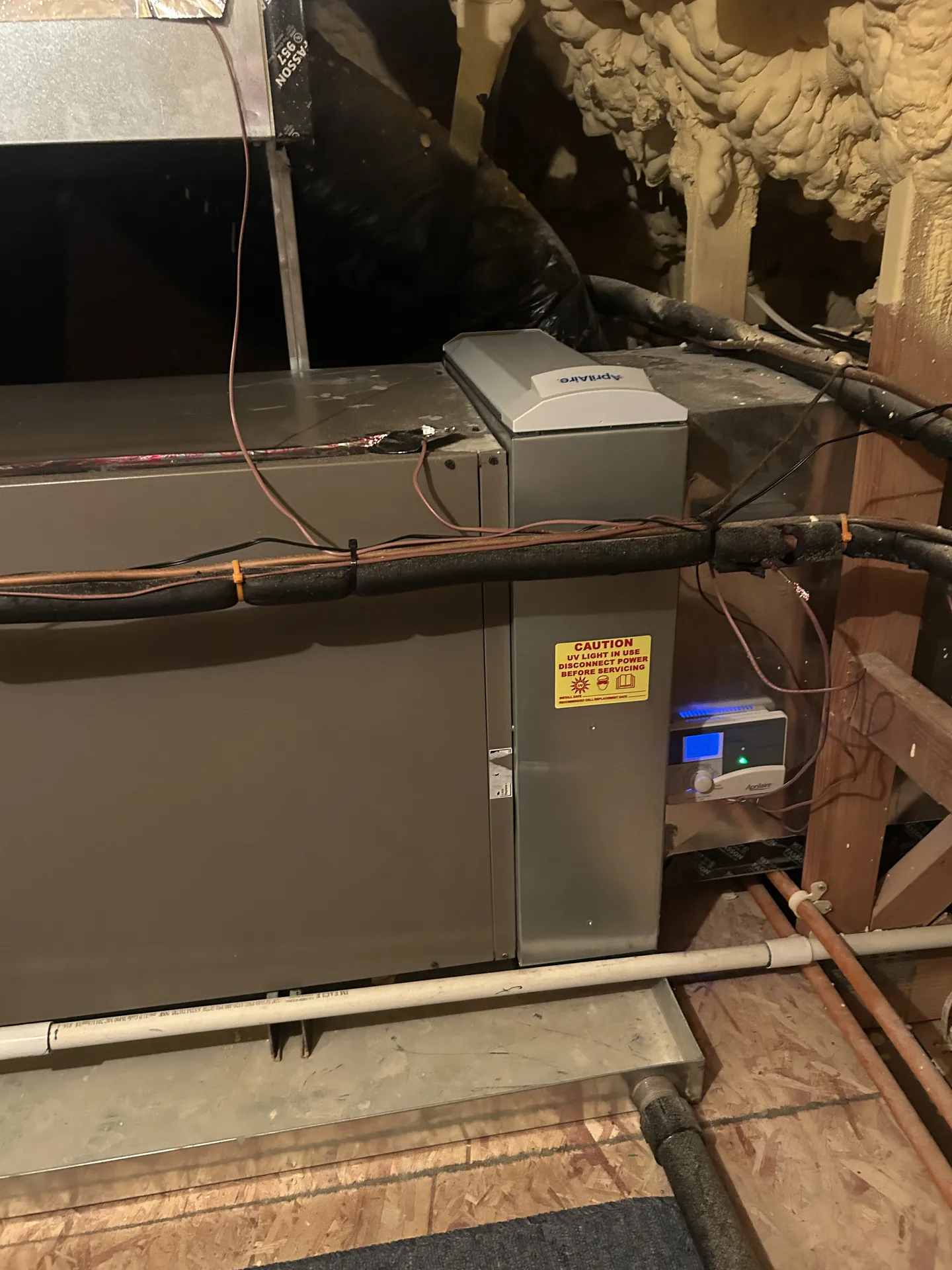
Static pressure in HVAC is measured in inches of water column (iwc) and represents the resistance to airflow created by ductwork, filters, coils, and registers. Most residential systems are designed for 0.5 iwc total external static pressure (ESP). Real-world measurements often show 0.8–1.2 iwc due to undersized return ducts, dirty filters, restrictive high-MERV filtration, or kinked flex duct — all of which cut airflow and capacity.
A 1.0 iwc reading on a system rated for 0.5 typically means you're getting 60–70% of the designed airflow. Symptoms include rooms that won't cool, frozen evaporator coils in summer, cracked heat exchangers in winter, and 30–40% capacity loss.
Common Questions
How is static pressure measured?
A technician drills small holes before and after the blower (or coil) and inserts a manometer probe. Differences across the filter, coil, and supply/return show exactly where airflow restrictions are.
What causes high static pressure?
Most common: undersized return ducts, dirty or overly restrictive air filters (MERV 13+ without ductwork upgrades), closed dampers, crushed flex duct, and undersized supply trunks.
Related Terms
Duct Sealing
Duct sealing closes the gaps, holes, and leaky joints in your duct system so the conditioned air your HVAC produces actually reaches the rooms instead of escaping into the attic or crawlspace.
MERV Rating
MERV is the air-filter rating system — higher MERV catches smaller particles (better filtration) but also restricts airflow more, which can strain your HVAC system if you go too high without sizing the filter housing properly.
Blower Motor
The blower motor is the fan motor inside your furnace or air handler that moves conditioned air through the ductwork — modern systems use variable-speed ECM motors for quieter operation and better humidity control.
Manual J Load Calculation
Manual J is the industry-standard whole-house heat-loss and heat-gain calculation that determines exactly how big your furnace and AC need to be — too big or too small both hurt comfort and efficiency.
Recent HVAC work in Utah
A few installs and service calls from the AYSP crew.
Have a question we didn't answer?
Talk to a licensed tech — no charge for phone questions.