What is Two-Stage HVAC?
Plain-English explanation from a licensed Utah HVAC, plumbing, and electrical contractor.
Two-stage equipment can run at full capacity OR a lower ~60% capacity — using low stage most of the time gives better comfort, quieter operation, and lower bills than a single-stage unit.
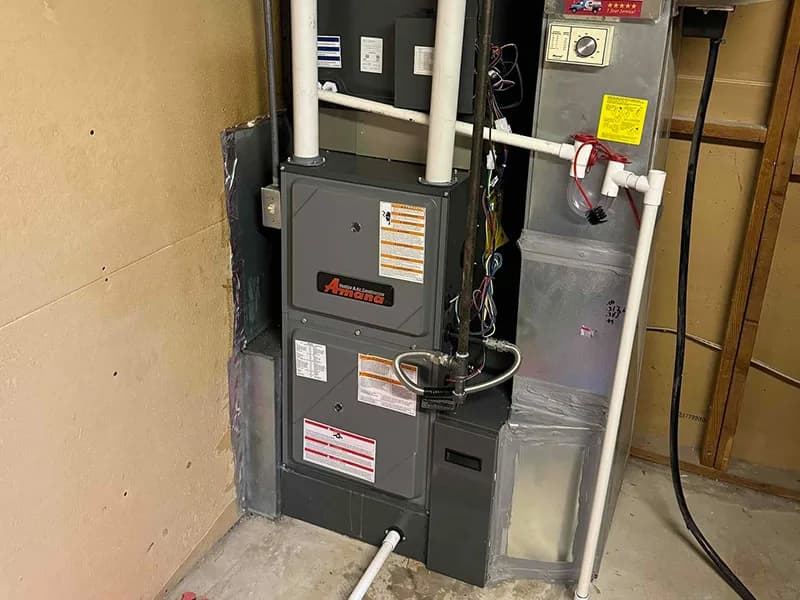
Full Definition
Two-stage furnaces, AC units, and heat pumps use a compressor (AC/heat pump) or gas valve (furnace) capable of operating at two output levels — typically 100% (high stage) and 60–67% (low stage). The system starts in low stage and only ramps to high stage when low can't keep up. Most days the system runs entirely in low stage, providing longer, gentler conditioning cycles.
Two-stage systems eliminate the 'cold blast then off' cycle of single-stage equipment. Utah customers consistently report better humidity control in summer, more even temperatures throughout the home, and 10–15% lower energy use compared to a single-stage equivalent.
Common Questions
Is two-stage worth the extra cost?
For most Utah homes the typical $400–$800 upcharge over single-stage pays back in 5–8 years through energy savings, and the comfort improvement is immediate and noticeable.
What's the difference between two-stage and modulating?
Two-stage has two output levels (low and high). Modulating (a.k.a. variable-capacity) can run at any output from ~30% to 100% in fine increments, giving even better comfort and efficiency — but at a higher upfront cost.
Related Terms
Modulating Furnace
A modulating furnace varies its gas input continuously from about 35% to 100% to exactly match your home's heat loss — instead of cycling on and off, it just runs longer at lower output.
AFUE
AFUE is the gas-furnace efficiency rating — it tells you what percentage of the fuel you pay for actually becomes usable heat in your home versus what escapes up the flue.
SEER
SEER is the cooling-efficiency rating of an air conditioner or heat pump — the higher the SEER number, the less electricity it uses per ton of cooling delivered over a typical Utah summer.
Recent HVAC work in Utah
A few installs and service calls from the AYSP crew.
Have a question we didn't answer?
Talk to a licensed tech — no charge for phone questions.