Reverse Osmosis Systems: How They Work and What They Remove
Understanding RO technology, maintenance, and whether you need it
Reverse Osmosis Systems: How They Work and What They Remove
Video walkthrough coming soon
How reverse osmosis works
Reverse osmosis (RO) forces water through a semi-permeable membrane under high pressure. Normal osmosis has water moving toward salt (trying to dilute it). Reverse osmosis reverses this, pushing water through the membrane, leaving dissolved minerals and contaminants behind. The membrane has pores so small (0.0001 microns) that dissolved minerals (sodium, calcium), salts, and many chemicals cannot pass through, but water molecules pass freely. Water exits in two streams: purified water (permeate) and concentrated waste water (brine). An RO system produces roughly 1 gallon of pure water and 2-4 gallons of waste water (depending on system efficiency and inlet water quality). This water-to-waste ratio is why RO isn't used for whole-home treatment — too much waste. It's typically used for drinking water at a single tap.
What reverse osmosis removes effectively
RO membranes remove: (1) Total dissolved solids (TDS) — nearly all minerals and salts (95-99% removal). (2) Lead, cadmium, copper, chromium (heavy metals). (3) Nitrates, nitrites (common well water contaminants). (4) PFAS (per- and polyfluorinated compounds, emerging contaminants found in some water supplies). (5) Arsenic (important for Utah well water). (6) Some pesticides and herbicides. (7) Sodium and other salts. RO removes very little bacteria or viruses (though newer RO units with additional stages can address this). RO is excellent for removing inorganic contaminants (minerals, metals, salts) but less effective on some organic compounds. For comprehensive treatment of contaminated well water, RO is often the centerpiece of multi-stage systems.
RO system stages and components explained
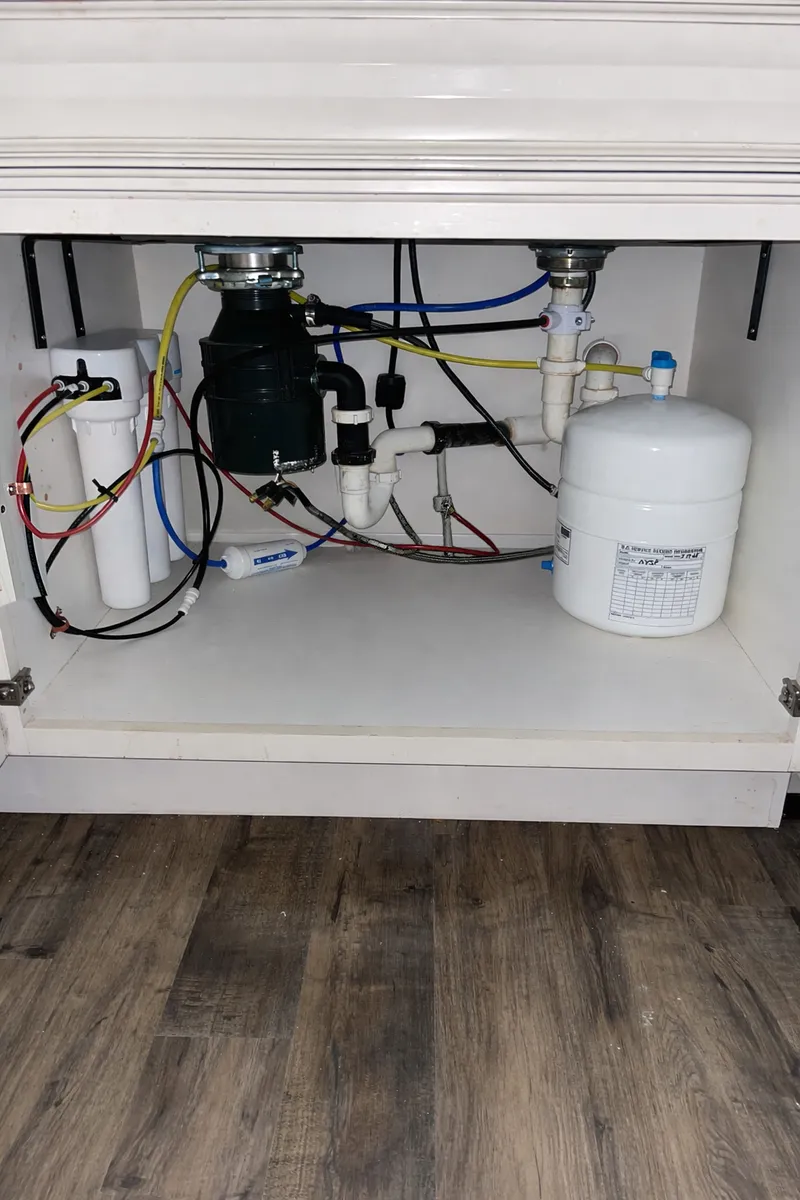
A typical point-of-use RO system has 3-5 stages: (1) Sediment filter (5-20 microns): removes sand, silt, rust. (2) Activated carbon filter: removes chlorine, taste, odor, some chemicals. (3) RO membrane (0.0001 microns): removes dissolved solids. (4) Activated carbon post-filter: polishes water and removes any taste. (5) Optional UV or mineral stage: UV disinfects (kills bacteria if present), or minerals remineralize (some people prefer slightly mineralized water). Whole-home RO systems exist but are impractical for most homes due to high cost and significant waste water. Point-of-use systems under the sink or countertop are standard. System size affects purification speed: 50 gallons per day (GPD) systems fill a glass in 2-3 minutes; smaller systems take longer. For your home, the in-home estimate is free, and you get the flat-rate price in writing before any work starts.
Waste water ratio and efficiency considerations
Standard RO systems produce 1 gallon of purified water for every 2-4 gallons of waste water (depending on inlet water quality, membrane age, and system design). High-waste ratios are concerning in drought regions like Utah. New efficient RO systems (reverse osmosis with better membranes) can achieve 1:1 or even better ratios, though these cost more. For a family that drinks 5-10 gallons of RO water daily, the waste is 10-40 gallons daily — significant for water conservation. Some RO systems can direct waste water to the garden or toilet tank (some loss is acceptable for these uses). Tank vs tankless systems: traditional RO stores purified water in a pressurized tank (1-4 gallons), dispensing on demand. Tankless RO produces water on demand but slower flow. Tanks take up space but provide faster dispensing; tankless are compact but slower.
Maintenance and filter replacement
RO systems require regular maintenance: (1) Sediment and carbon filters replaced annually (or 6 months in high-sediment water). (2) RO membrane replaced every 2-5 years depending on water quality and usage. (3) Post-carbon filter replaced annually. (4) Tank (if present) should be replaced if it develops leaks (typically 5-10 years). Filters and supplies are a modest yearly cost if you DIY. For service on a whole-home RO system, we give you the flat-rate price on site, before any work starts. For point-of-use under-sink systems, filter replacement is simple DIY. Many manufacturers sell filter cartridges direct to consumers. Setting calendar reminders for filter replacement ensures the system continues removing contaminants effectively. A clogged filter means contaminants pass through untreated, defeating the purpose. In high-sediment water (Utah well water often has sediment), filters load quickly and need frequent replacement.
Have questions? We're here to help.
Our licensed technicians serve Utah, Salt Lake, Davis, Wasatch and Summit counties plus the Tooele Valley.
Official Resources
Talk to a licensed technician about your specific situation — no pressure, no obligation.
Call (801) 407-9320