HVAC Tune-Ups: What's Included and Why Preventive Maintenance Saves Money
Understanding furnace and AC tune-ups and the ROI of regular maintenance
HVAC Tune-Ups: What's Included and Why Preventive Maintenance Saves Money
Video walkthrough coming soon
What's included in an HVAC tune-up
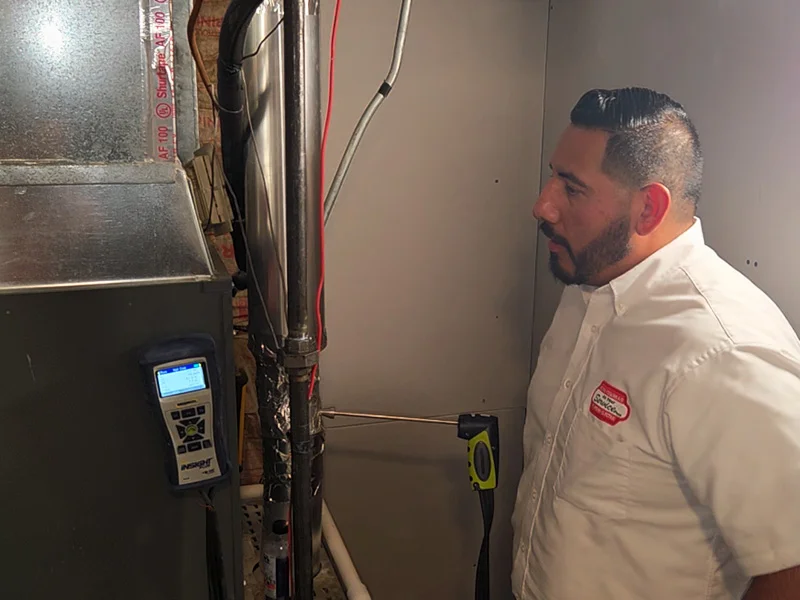
An HVAC tune-up (also called maintenance or service call) is a systematic inspection and adjustment of your heating/cooling system. A comprehensive tune-up includes: (1) Inspecting and cleaning (or replacing) the air filter. (2) Testing thermostat operation and calibration. (3) Checking furnace or AC electrical connections for corrosion or loose wires. (4) Inspecting the heat exchanger visually (furnace) or evaporator coil (AC) for damage or corrosion. (5) Measuring electrical current (amperage) to detect problems. (6) Checking gas pressure and temperature rise (furnace) or superheat/subcooling (AC). (7) Cleaning the blower assembly and motor. (8) Checking condensate drain (AC) for clogs. (9) Inspecting ductwork and connections. (10) Testing safety controls (limit switches, rollout switches). (11) Measuring static pressure. (12) Running the system through heating and cooling cycles to verify operation. A typical tune-up takes 1-2 hours. Our furnace or AC tune-up is a flat $149, and Service Partner Plan members have their annual tune-ups included.
Furnace tune-up vs AC tune-up: what's different
A furnace tune-up focuses on heating performance: checking gas valve operation, measuring temperature rise (difference between entering and leaving air), verifying the heat exchanger isn't corroded or cracked, checking vent pipe safety, and cleaning burners. An AC tune-up focuses on cooling: checking refrigerant charge (using superheat/subcooling measurement), cleaning the outdoor coil, checking the condenser fan operation, and measuring electrical efficiency. Both check electrical safety, filter, thermostat, and blower. In dual-mode systems (furnace + AC), a comprehensive tune-up checks both. Spring AC tune-ups before cooling season and fall furnace tune-ups before heating season are ideal timing — catching problems before you need the system. Some contractors offer combo tune-ups in spring and fall (reducing per-visit cost) since both systems can be serviced in one visit.
Frequency: when to schedule tune-ups
The industry standard is one tune-up per season per unit: fall for furnaces (before heating), spring for AC (before cooling). This ensures systems are clean and functioning optimally when you need them most. Some manufacturers recommend once per year for efficiency and warranty compliance. Systems nearing 15-20 years old (end of life) benefit from more frequent maintenance because components degrade and need more frequent adjustment. New systems (under 5 years) need minimal maintenance beyond air filter changes. For a typical Utah home with a furnace and AC, two tune-ups per year is a worthwhile investment to prevent breakdowns. Our Service Partner Plan runs from $14/month (monthly plans run 12 months) or $167/year, and it bundles both tune-ups, repair discounts, and priority emergency service at a lower per-visit cost than one-time visits.
What technicians check and why each item matters
Filter check: Clogged filters restrict airflow, reducing efficiency and causing static pressure problems. Electrical connections: Loose connections corrode, causing poor contact and electrical faults. Heat exchanger (furnace): Cracks leak combustion gas into supply air (health hazard). Corrosion indicates age or moisture problems. Coil (AC): Corrosion restricts refrigerant flow; clogged coils reduce capacity. Refrigerant charge: Overcharge/undercharge damages compressor and reduces efficiency. Blower cleaning: Dust reduces motor efficiency and air movement. Thermostat: Faulty thermostats cause temperature swings and energy waste. Safety controls: Rollout switches, limit switches, pressure switches prevent dangerous conditions. Static pressure: High pressure indicates ductwork problems and equipment stress. Each item checked addresses efficiency, safety, or equipment longevity. A thorough tune-up identifies small problems before they become expensive failures.
ROI of preventive maintenance
A furnace or AC breakdown in the middle of the season is an expensive emergency (parts, labor, and often an after-hours visit), and a breakdown of a 15-year-old furnace usually means replacement. Annual preventive maintenance is a fraction of either of those numbers: if maintenance prevents even one catastrophic breakdown in a 20-year period, the ROI is immediate. Beyond emergency avoidance, regular maintenance improves efficiency: a clean furnace or AC operates 5-15% more efficiently than a dirty one, offsetting maintenance cost through energy savings. Equipment serviced regularly lasts 15-20 years; neglected equipment lasts 10-12 years. The total cost of ownership (purchase + maintenance + fuel + eventual replacement) favors preventive maintenance dramatically: homeowners who maintain their systems spend significantly less over 20 years than those who skip maintenance and absorb higher utilities, more breakdowns, and earlier replacement.
Have questions? We're here to help.
Our licensed technicians serve Utah, Salt Lake, Davis, Wasatch and Summit counties plus the Tooele Valley.
Official Resources
Related Guides
Talk to a licensed technician about your specific situation — no pressure, no obligation.
Call (801) 407-9320