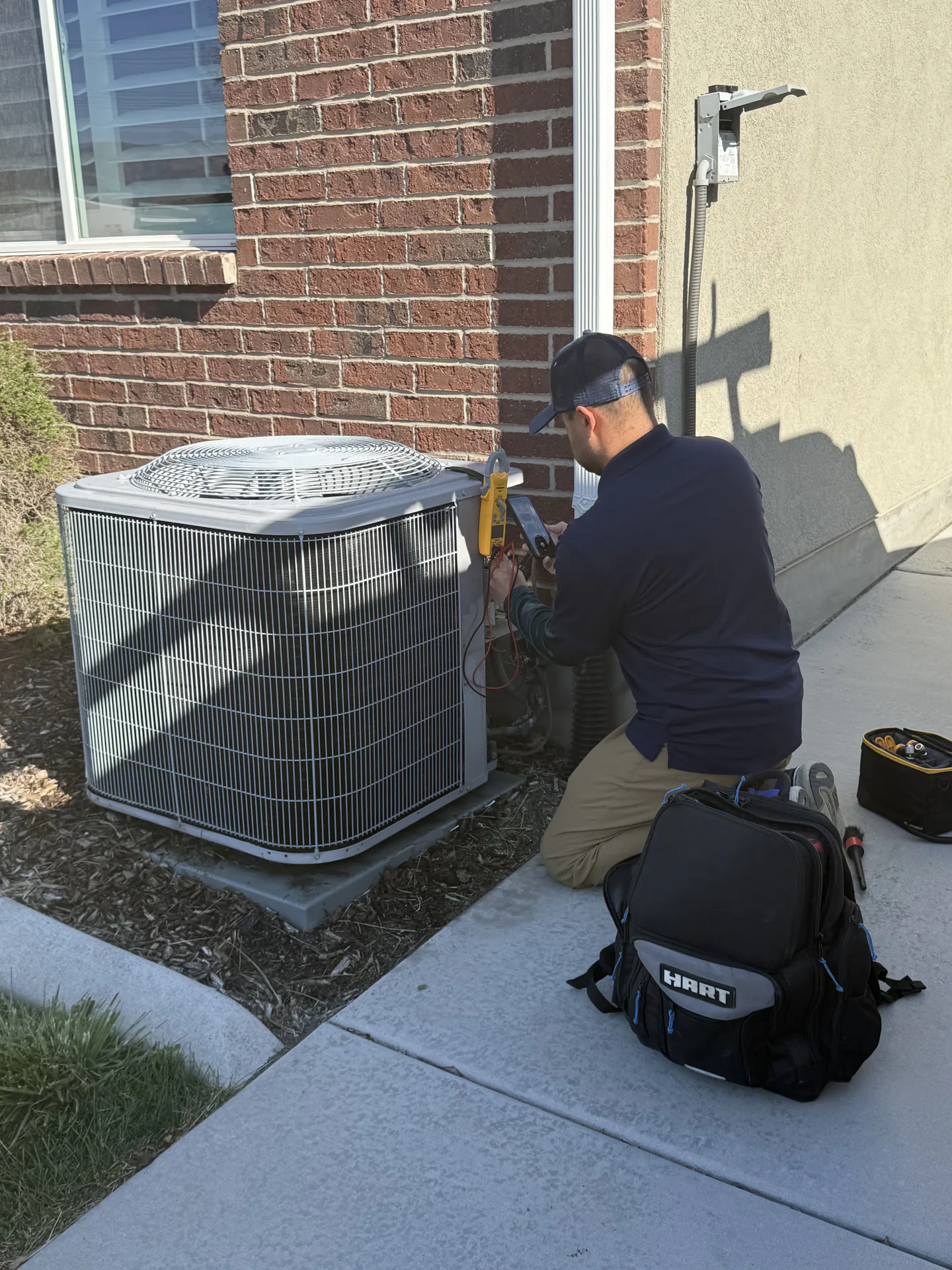
AC Won't Turn On At All? (Utah Diagnostic Guide)
Thermostat set to cool, nothing happens. Here are the most likely reasons a Utah AC goes completely dead, the five checks you can safely make yourself, and the signs it's time to call.
Quick answer
Usually this is thermostat has no power (dead batteries or tripped safety circuit), tripped breaker or pulled outdoor disconnect, or condensate float switch tripped (safety shutoff), listed in the order we actually find them in Utah homes. 5 min of checks (thermostat, breaker, disconnect, float switch, filter) identify the cause of most completely-dead AC calls before a tech ever comes out. Run the safe checks below first; if the fix isn't one of them, a licensed tech can diagnose it on-site for a $79 dispatch and diagnostic fee, waived when you approve the repair.
A totally dead AC is different from one that runs but doesn't cool: something is cutting the power or the control signal. That short list is what makes it diagnosable from home. The culprits, in rough order: thermostat power, a tripped breaker or pulled disconnect, a tripped condensate safety switch, a blown low-voltage fuse, or a failed capacitor that hums but never starts. Work through the checks below in order.
Diagnostic
Most likely causes (in order)
Walk through the list top-to-bottom. The first cause matches roughly half of cases we see in Utah; if it doesn't fit your symptoms, move to the next.
Thermostat has no power (dead batteries or tripped safety circuit)
A blank thermostat can't call for cooling. Battery-powered stats die quietly; hardwired stats lose power when a safety device (like a condensate float switch) opens the 24-volt circuit on purpose. Either way the AC never gets the message.
Tripped breaker or pulled outdoor disconnect
The AC has two power feeds: a breaker in the panel and a pull-out disconnect on the wall beside the condenser. A summer voltage sag, a failing part drawing extra current, or landscaping work bumping the disconnect can kill either one.
Condensate float switch tripped (safety shutoff)
When the condensate drain clogs, a small float switch cuts the system off before the pan overflows into your ceiling or furnace. The AC looks dead, but it is protecting your house. Clearing the drain restores it.
Blown low-voltage fuse or failed transformer
The furnace or air handler control board carries a small automotive-style 3-amp fuse. A chafed thermostat wire or a shorted outdoor contactor coil pops it, and the whole system (heat and cool) goes silent.
Failed capacitor or contactor at the condenser
If the outdoor unit hums or clicks but never spins up, the dual-run capacitor is the usual suspect, especially after heat waves. Capacitors are a fast, inexpensive pro repair, but they take a meter to confirm safely.
DIY first
Safe checks you can do today
Each step is labeled by safety level. Stop at any “Pro only” step, that's where the diagnostic crosses into work that needs gauges, multimeters, or live electrical access.
Check the thermostat screen and batteries
Safe DIYBlank screen? Swap batteries if it takes them. If it's hardwired and blank, continue down this list: something upstream cut its power.
Check the breaker panel, and reset a tripped AC breaker once
CautionFind the breaker labeled AC, condenser, or air handler. If it's tripped, reset it one time. If it trips again, stop. Repeated resets into an electrical fault can turn a small repair into a big one.
Check the outdoor disconnect box
CautionThe gray box on the wall near the condenser has a pull-out block. Make sure it's seated fully and right-side up. Kids, landscapers, and painters pull these more often than you'd think.
Look for a tripped float switch and a full drain pan
Safe DIYAt the indoor unit, look for a small switch on the drain pan or on the white PVC drain line. If the pan under the coil has standing water, the float switch did its job. See our AC-leaking-water guide for clearing the drain.
Stop here if the system stays dead
Pro onlyIf the thermostat has power, breakers are on, and the drain is clear, you're into fuse, transformer, capacitor, or board territory. Those take a multimeter. The diagnostic visit is $79, waived when you approve the repair.
Stop and call
When you should call us instead
- Breaker trips again right after a reset: electrical fault, stop resetting
- Outdoor unit hums or clicks but the fan never spins: capacitor or contactor
- Burning smell anywhere near the equipment: shut it down and call now
- The low-voltage fuse blows repeatedly: a short is hiding in the control wiring
- System is 12+ years old and completely dead: worth an evaluation before any big repair
Not sure if it's a real problem?
Our AI walks you through the same triage a senior tech would, figures out whether you need a service call or whether it's something simpler you can handle yourself. Or skip ahead and book a diagnostic visit.
FAQ
Frequently asked questions
My AC won't turn on after a power outage. What do I check?
+
Outages are the classic cause of a tripped AC breaker and a scrambled smart thermostat. Check the breaker panel first, then power-cycle the thermostat (pull it off its base for 30 seconds or reboot it from the app). Many condensers also have a built-in restart delay of up to 5 minutes after power returns, so give it time before assuming the worst.
The outdoor unit clicks but doesn't start. Is that the capacitor?
+
Very often, yes. The contactor clicks in, the compressor tries to start, and without a healthy capacitor it can't. Capacitors are one of the most common summer failures in Utah's heat and one of the quicker repairs, but testing and replacing one involves stored electrical charge, so it's a pro job.
Can I run the furnace fan while the AC is dead?
+
If the thermostat has power, setting the fan to ON circulates air and can take an edge off warm rooms, and it's safe. If the whole system is dead including the fan, the problem is upstream (fuse, transformer, breaker) and the fan won't run either.
Related
More diagnostic guides
Other common Utah-home symptoms with the same step-by-step diagnostic format.
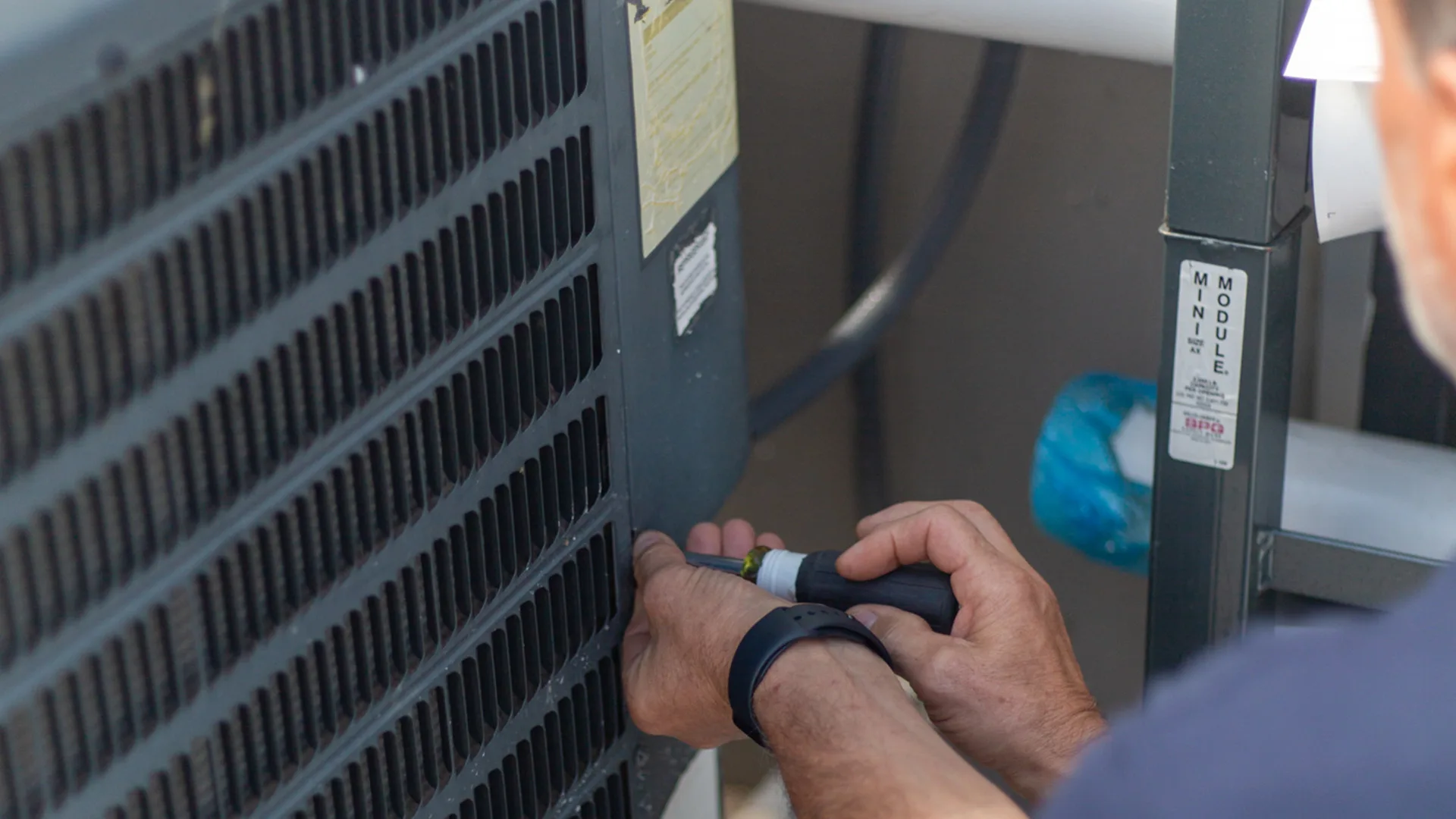
Why Is My AC Blowing Warm Air? (Utah Diagnostic Guide)
AC running but not cool, top causes, fast checks, and when to call.
AC Not Cooling at All? Utah Diagnostic Guide
AC running but barely cooling, diagnostic flowchart and triage.
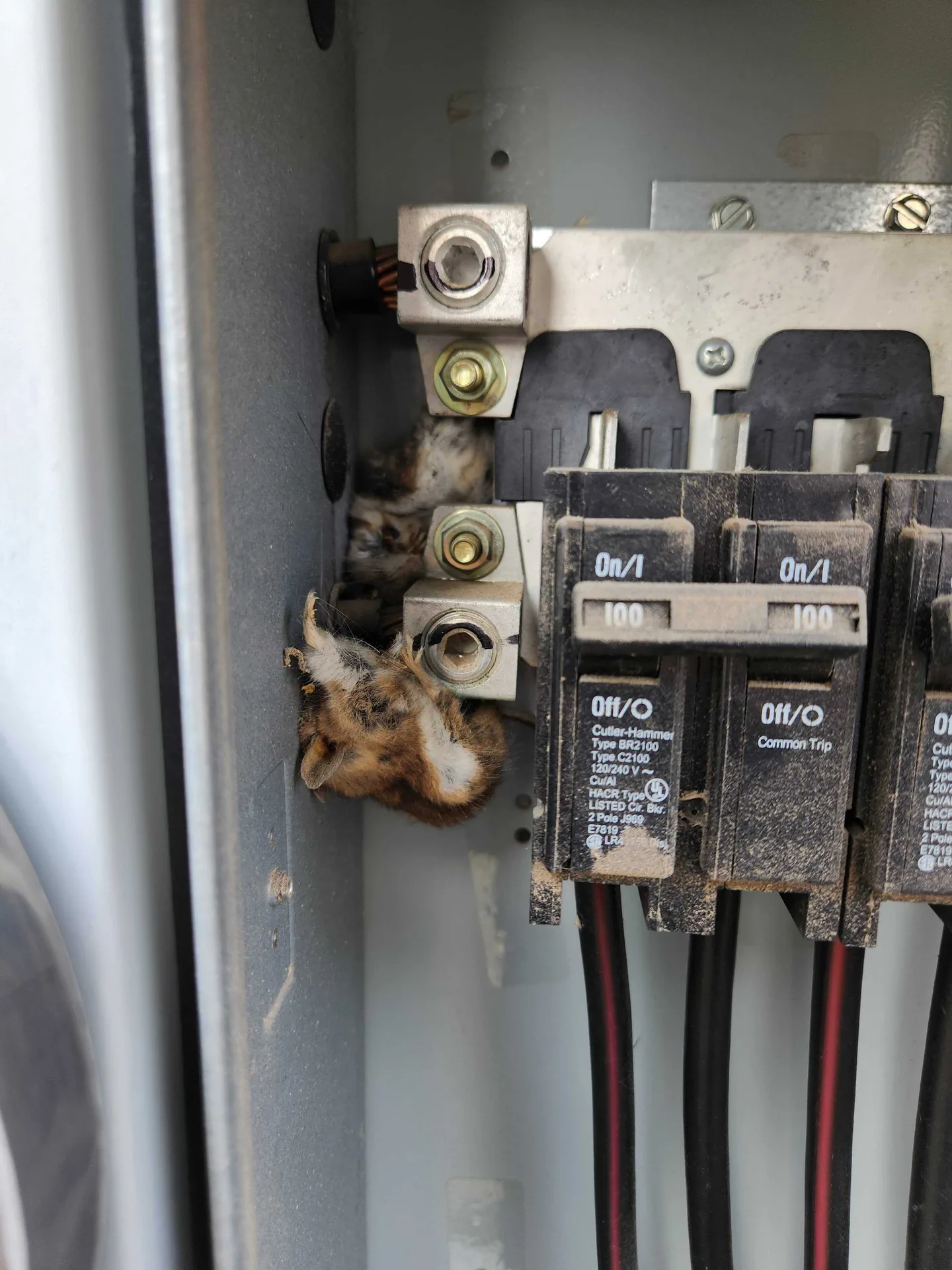
Breaker Keeps Tripping? Utah Electrical Diagnostic
Same breaker keeps tripping, overload, short, or fault? Diagnostic guide.